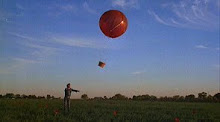
‘Somewhere’, the fourth film by Sofia Coppola begins with a car racing in and out of frame on a small, circular racetrack. The camera lingers on this scene for a good time, allowing the audience time to reflect on what the next couple of hours will bring. Will it be a miraculous change of direction for Coppola, a gritty, abrasive about two resentful family members? Or maybe, just maybe, Francis’ daughter will stick to her tried and tested cocktail of disaffected privileged people and studied ambience…
Yes, this is ANOTHER one of those films. But, as always, you can’t help but be compelled by the hypnotic mini-tragedies that Coppola presents us with. Here, the comfortably numb protagonist is played by Stephen Dorff, playing not-so-out-of-type as a bored film star in LA. When his casting was first announced I’m sure I wasn’t the only one who puzzled over his choice. Stephen Dorff isn’t a prestige actor, a name actor or someone with indie credibility. He’s just a minor movie star; which is absolutely perfect for the role. He has the movie star looks and presence, but offset with a rough and tired demeanour. One of the interesting things about his performance is the lack of emotion eminating from him-he feels like he’s coasting on neutral. Yes, this is a large aspect of many of Coppola’s central characters, but here it feels even more neutered, and for the audience, more of a challenge.
The film, like her previous works, plays in cycles and repetition, illuminating the mundanity and narrowness of Marco’s life. We see him smoking in his bedroom, in a restaurant, on his balcony, fooling around with girls, driving his shiny black sports car. Harry Savides, the legendary cinematographer (he worked with Francis among others), brings a casual, observational style to these ‘nothing’ scenes, letting Marco’s complacency ring out across the cinema. In particular, the awkward framing of a couple of showgirls performing privately for Marco leaves the viewer anything but tillitated. This particular scene is evidence of Coppola’s distinctive ability to find the wry humour and sadness in a situation.
Marco is mildly awakened from his slumber by the arrival back into his life of his daughter Cleo, plaed by Elle Fanning. Cleo, a bright, good natured girl is the juxtaposing purity to the seediness of Marco’s life. Is this perhaps a little contrived on Coppola’s part? Perhaps, but it works; without Elle, Marco, and the audience, would have nothing to live on. As some critics have noted, Elle, like the rest of the characters in the film, rarely ever challenges Marco’s lifestyle. One might say this is one of the most bittersweet and truthful aspects of the film; people are too wary to criticise and hurt people around them for fear of irreparably damaging them. It doesn’t hinder Marco that he is a famous film star, of course.
It’s hard to say what ‘Somewhere’ is really trying to tell us. Is it simply another film of alienated souls, or is there something more going on? One strong notable theme seems to be the representaion and sexualisation of women. Coming from a female director in particular, the scenes of Marco seducing numerous faceless women appear to be a strong indictment of the way women have been overly sexualised and demeaned in media and society. Coppola also points to the realtionship he has with women being an integral part to his own unhappiness. There is one small hint at unrest with his mother; we hear him on the phone onto his agent about a book that she has written about him.
Other than that, though, this is standard Coppola. Lost in Translation may have explored all these themes and ideas in a more potent and concise way, but Somewhere is still a compelling and enjoyable expansion on these points. It brings to mind Wim Wender’s excellent ‘Alice in the cities’ in both situation and style, but doesn’t quite live up to the standard of that particular film or her own previous work. It is, though, another welcome addition to her canon.
Monday, 5 September 2011

Nightwatching + Peter Greenaway Q & A
Nightwatching, apparently Greenaway’s 15th film proper, tells the story of Rembrandt Van Rijn’s painting ‘The Nightwatch’ and its conception. In the British director’s version of events, Rembrandt reluctantly took on the task of painting an ensemble portrait of a group of Dutch dignitaries, but is tormented by the idea of glorifying a bunch of men with an array of sordid and unsavoury backgrounds. Thus, Rembrandt conspires to decorate the painting with subtle hints of their crimes, in order to expose their criminality and maintain his integrity as a painter. These hints include the appearance of an abused maid, a banished soldier and a fired gun- all evidence of corrupt activities.
Greenaway’s films have often been concerned with conspiracies and mysteries, so Nightwatching is in good company. I think the most able comparison for the film is his early feature The Draughtsman’s Contract, where a painter becomes entangled in a country house murder mystery. His new film is possibly one of his most accessible; in the Q & A he stated that he was encouraged to do A (commercial) and B (artistic) films in rotation, and this was considered by his backers as an A film.
How does it match up to his previous work? Well, I’d say it was up there with his best. Not quite up to the standards of The Cook, the thief…, but equal to Draughtsman’s and A Z and Two Noughts. It is one of his most warm, comedic films; the characters are actually very well drawn out and there are signs of genuine emotion. Martin Freeman is very good in the lead role, drawing on his comic capabilities as a put-upon man, while demonstrating a more dramatic pathos as well. The supporting cast is reliably excellent, although I was a little bemused by Nathalie Press’ performance; unneringly precious and slightly eerie in its execution.
But more importantly, as we’re talking about an artist filmmaker here, is that it looks absolutely stunning. Almost every interior is lit exquisitely like a Rembrandt painting. The period is accurately rendered in the production design, while the dramatic lighting gives the sets and the actors a resolutely painterly appearance. One of the standout scenes for me was an early scene where the house dines round circular tables, each person draped in shadow and with the slightly grainy texture of a painting. It is arguably his most visually resplendent film since Sacha Vierny’s death.
Another departed collaborator in Michael Nyman is hardly missed; his Polish successor conjuring Nyman’s propulsive and alternately serene passages, but in a new form. Nyman’s scoring is always something to look forward to, but here he has a capable substitute. One interesting thing Greenaway said was that one of the reasons he got into film was because he wanted to put paintings to music, and couldn’t do it anywhere else. Furthermore, instead of combining the visuals and aural aspects seamlessly into the narrative, he has always been determined to make the audience extremely aware of each element of production.
Greenaway was a compelling subject. He spoke with an actors booming voice and authority, somewhat pretentious some might say, talking into the heavens like a bonafide academic. I got the feeling, being that this was probably one of his first encounters with a British audience for a while, that he was using it as a platform for himself, and perhaps even wanted to prove something. He has often spoken out about the constraints of the British film industry, particularly for himself, and rightly so. One of the most pertinent questions was ‘Where can we get hold of your films?’, a damning indictment of Greenway’s reception in the UK. Much of the discussion centred around the future of cinema-it’s dead, apparently- and Greenaway’s multimedia work. He showed us a short clip of his work with ‘The Last Supper’, which used computer graphics to distort and play with the image. Frankly, it looked pretty silly and not far from an 80’s educational science video.
Stick to the feature films, Peter.
Greenaway’s films have often been concerned with conspiracies and mysteries, so Nightwatching is in good company. I think the most able comparison for the film is his early feature The Draughtsman’s Contract, where a painter becomes entangled in a country house murder mystery. His new film is possibly one of his most accessible; in the Q & A he stated that he was encouraged to do A (commercial) and B (artistic) films in rotation, and this was considered by his backers as an A film.
How does it match up to his previous work? Well, I’d say it was up there with his best. Not quite up to the standards of The Cook, the thief…, but equal to Draughtsman’s and A Z and Two Noughts. It is one of his most warm, comedic films; the characters are actually very well drawn out and there are signs of genuine emotion. Martin Freeman is very good in the lead role, drawing on his comic capabilities as a put-upon man, while demonstrating a more dramatic pathos as well. The supporting cast is reliably excellent, although I was a little bemused by Nathalie Press’ performance; unneringly precious and slightly eerie in its execution.
But more importantly, as we’re talking about an artist filmmaker here, is that it looks absolutely stunning. Almost every interior is lit exquisitely like a Rembrandt painting. The period is accurately rendered in the production design, while the dramatic lighting gives the sets and the actors a resolutely painterly appearance. One of the standout scenes for me was an early scene where the house dines round circular tables, each person draped in shadow and with the slightly grainy texture of a painting. It is arguably his most visually resplendent film since Sacha Vierny’s death.
Another departed collaborator in Michael Nyman is hardly missed; his Polish successor conjuring Nyman’s propulsive and alternately serene passages, but in a new form. Nyman’s scoring is always something to look forward to, but here he has a capable substitute. One interesting thing Greenaway said was that one of the reasons he got into film was because he wanted to put paintings to music, and couldn’t do it anywhere else. Furthermore, instead of combining the visuals and aural aspects seamlessly into the narrative, he has always been determined to make the audience extremely aware of each element of production.
Greenaway was a compelling subject. He spoke with an actors booming voice and authority, somewhat pretentious some might say, talking into the heavens like a bonafide academic. I got the feeling, being that this was probably one of his first encounters with a British audience for a while, that he was using it as a platform for himself, and perhaps even wanted to prove something. He has often spoken out about the constraints of the British film industry, particularly for himself, and rightly so. One of the most pertinent questions was ‘Where can we get hold of your films?’, a damning indictment of Greenway’s reception in the UK. Much of the discussion centred around the future of cinema-it’s dead, apparently- and Greenaway’s multimedia work. He showed us a short clip of his work with ‘The Last Supper’, which used computer graphics to distort and play with the image. Frankly, it looked pretty silly and not far from an 80’s educational science video.
Stick to the feature films, Peter.
Sunday, 10 April 2011
Cave of Forgotten Dreams
It seemed like a match made in heaven; Werner Herzog, legendary filmmaker/explorer, making a film about a newly discovered cave in France, a haven for a wealth of the oldest paintings ever seen. Herzog is a director who likes to break new ground, illuminate the unknown, search the globe's nooks and crannies for that elusive 'ecstatic truth'. In the Chauvet caves in Southern France, we have something that should spark a glint in wizened Werner's eyes. So why does the film feel so.....flat?
The main conclusion I have to come to is this; this is not strictly a Werner Herzog film. He is not the star of the show, in fact he is barely present either on screen or even in narration. This film is about the caves and the mysterious paintings they present. The world's oldest art gallery. For me, this is disappointing. Werner's rapport with his subjects (human subjects I might add) creates a warmth and connection which is sorely lacking in 'Cave...'. His soft, authoritative Bavarian tones are instead replaced by a series of rather dry descriptions from the cave's protectors, further disconnected by the lifeless translations. Early on in the film Herzog informs us that filming will be restricted, therefore he will need to involve himself with the technical work. Fair enough, but you almost get the feeling Herzog is less involved with this project in his screen absence. You miss his wit and eccentricity.
The caves, of course, are highly fascinating. A series of perfectly formed, articulate drawings are scattered across the walls; bears, cats and other wild animals. The artistry, if you consider they were made thousands of years ago, is striking. What's more, the drawings seem to be co-ordinated into particular patterns, sophisticated arcs and swirls, repetitions. They are not mere primal doodlings.They are worthy of publicity, worthy of documenting for sure. Yet, I didn't feel immersed in the cave and the paintings like the film intended the audience to be. The 3D was fine, but it wasn't experiential. I felt like I was watching a film about the cave paintings, I wasn't mesmerised by them and wasn't induced into feverish daydreams by them, like the people on screen. It was a disconnection, and this is fundamental blow to the film. When the human subjects talked about dreams and human connection and blah blah blah...... I could understand them but didn't feel it.
Usually Herzog happens upon the eccentrics and the nomads with ease, but this time they must have all been hiding in other caves. The French archeologists are enthusiastic but ultimately serious academics and as such not really Herzog fodder. Even the 'experimental archeologist', out in the wild with his primal flute and animal skin casual wear seems oddly subdued. Give me Timothy Treadwell and nomadic truck drivers any day of the week.
Cave of Forgotten Dreams; a worthy, solid reportage of a fascinating cultural treasure, but a missed opportunity for Herzog.
6/10
The main conclusion I have to come to is this; this is not strictly a Werner Herzog film. He is not the star of the show, in fact he is barely present either on screen or even in narration. This film is about the caves and the mysterious paintings they present. The world's oldest art gallery. For me, this is disappointing. Werner's rapport with his subjects (human subjects I might add) creates a warmth and connection which is sorely lacking in 'Cave...'. His soft, authoritative Bavarian tones are instead replaced by a series of rather dry descriptions from the cave's protectors, further disconnected by the lifeless translations. Early on in the film Herzog informs us that filming will be restricted, therefore he will need to involve himself with the technical work. Fair enough, but you almost get the feeling Herzog is less involved with this project in his screen absence. You miss his wit and eccentricity.
The caves, of course, are highly fascinating. A series of perfectly formed, articulate drawings are scattered across the walls; bears, cats and other wild animals. The artistry, if you consider they were made thousands of years ago, is striking. What's more, the drawings seem to be co-ordinated into particular patterns, sophisticated arcs and swirls, repetitions. They are not mere primal doodlings.They are worthy of publicity, worthy of documenting for sure. Yet, I didn't feel immersed in the cave and the paintings like the film intended the audience to be. The 3D was fine, but it wasn't experiential. I felt like I was watching a film about the cave paintings, I wasn't mesmerised by them and wasn't induced into feverish daydreams by them, like the people on screen. It was a disconnection, and this is fundamental blow to the film. When the human subjects talked about dreams and human connection and blah blah blah...... I could understand them but didn't feel it.
Usually Herzog happens upon the eccentrics and the nomads with ease, but this time they must have all been hiding in other caves. The French archeologists are enthusiastic but ultimately serious academics and as such not really Herzog fodder. Even the 'experimental archeologist', out in the wild with his primal flute and animal skin casual wear seems oddly subdued. Give me Timothy Treadwell and nomadic truck drivers any day of the week.
Cave of Forgotten Dreams; a worthy, solid reportage of a fascinating cultural treasure, but a missed opportunity for Herzog.
6/10
Tuesday, 21 December 2010
A record: Films of 2010
1. Enter The Void- Gaspar Noe
2. The Social Network-David Fincher
3. Bad Lieutenant
4. Nightwatching
5. Somewhere
6. Of Gods and Men
7. Another Year
8. Inception
9. Greenberg
10. Dogtooth
11. Still Walking
12. Tamara Drewe
13. Avatar
14. Departures
15. Uncle Boonmee who can recall his past lives
16. The Killer Inside Me
17. White Material
18. The Headless Woman
2. The Social Network-David Fincher
3. Bad Lieutenant
4. Nightwatching
5. Somewhere
6. Of Gods and Men
7. Another Year
8. Inception
9. Greenberg
10. Dogtooth
11. Still Walking
12. Tamara Drewe
13. Avatar
14. Departures
15. Uncle Boonmee who can recall his past lives
16. The Killer Inside Me
17. White Material
18. The Headless Woman
Thursday, 21 October 2010
The Music of Chance
Paul Auster, one of America's most gifted living novelists, has always written works which could easily be translated to the silver screen. The New York Trilogy, for one, could easily find kinship with the film noir genre, while The Book of Illusions enters the forgotten world of the silent cinema of the 20's. So it's strange that Paul Auster and the cinema have only made fleeting advances towards each other, standing cautiously at opposite sides of the room. Smoke, directed by Wayne Wang and written by Auster, is one adventure into the limelight; the other is The Music of Chance.
Auster has always been entranced by fate, chance, patterns; his characters seem to have a supernatural sense of their paths in life. The Music of Chance, which I admit I have not read as a novel, is a typical Auster work. Everything revolves around this idea of chance. The film starts with an intriguing introduction to one of our protagonists; a beaten and shabby looking man wandering along a highway in broad daylight. A garish powder blue suit is tattered and torn. This is Jack Pozzi (James Spader). A passing car pulls up, and Jim (Mandy Patinkin), a sturdy, solid man's man offers this stray cat a ride. Is it fate, or just coincidence? What makes Jim stop? This is textbook Auster. Already he has you guessing.
The pair spark up an unlikely companionship. We learn of Jack's career as an expert card player, in a bad patch, and Jim's former life as a fireman, but now driving aimlessly on the road to nowhere and everywhere. Again, these are familiar Auster characters; people pushed to the outskirts of society, often by themselves. Jim has a wealth of cash to burn and a happy-go-lucky streak, Jack has a failsafe plan to win a lucrative card game. It seems fate has brought them together. The two head off to a remote country estate, where a pair of eccentric old businessmen reside. This is the setting for the card game, and the turning point for the film. I won't spoil it, but things take a turn for the unexpected.
This is a very competent adaptation of a very good writer's work. Phillip Haas's direction is unpretentious and sophisticated; his finest move is letting the story and the characters work their magic. James Spader doesn't seem to be in much notable films these days, which is a shame because he made a spate of good films in the 90's. He brings a nervous, desperate energy to the scuzzy Jack Pozzi. Mandy Patinkin provides a perfect foil; the straight man, if you will. His performance is almost Bresson-ian in it's spareness; his masculine, angular features embodying a solid, moral centre in contrast to Pozzi.
A very solid and worthwhile adaptation, which carries the appeal of Auster's writing; it is absorbing, enigmatic and playful.
7/10
Auster has always been entranced by fate, chance, patterns; his characters seem to have a supernatural sense of their paths in life. The Music of Chance, which I admit I have not read as a novel, is a typical Auster work. Everything revolves around this idea of chance. The film starts with an intriguing introduction to one of our protagonists; a beaten and shabby looking man wandering along a highway in broad daylight. A garish powder blue suit is tattered and torn. This is Jack Pozzi (James Spader). A passing car pulls up, and Jim (Mandy Patinkin), a sturdy, solid man's man offers this stray cat a ride. Is it fate, or just coincidence? What makes Jim stop? This is textbook Auster. Already he has you guessing.
The pair spark up an unlikely companionship. We learn of Jack's career as an expert card player, in a bad patch, and Jim's former life as a fireman, but now driving aimlessly on the road to nowhere and everywhere. Again, these are familiar Auster characters; people pushed to the outskirts of society, often by themselves. Jim has a wealth of cash to burn and a happy-go-lucky streak, Jack has a failsafe plan to win a lucrative card game. It seems fate has brought them together. The two head off to a remote country estate, where a pair of eccentric old businessmen reside. This is the setting for the card game, and the turning point for the film. I won't spoil it, but things take a turn for the unexpected.
This is a very competent adaptation of a very good writer's work. Phillip Haas's direction is unpretentious and sophisticated; his finest move is letting the story and the characters work their magic. James Spader doesn't seem to be in much notable films these days, which is a shame because he made a spate of good films in the 90's. He brings a nervous, desperate energy to the scuzzy Jack Pozzi. Mandy Patinkin provides a perfect foil; the straight man, if you will. His performance is almost Bresson-ian in it's spareness; his masculine, angular features embodying a solid, moral centre in contrast to Pozzi.
A very solid and worthwhile adaptation, which carries the appeal of Auster's writing; it is absorbing, enigmatic and playful.
7/10
Saturday, 5 September 2009
Public Enemies
For me, Michael Mann is one of the finest filmmakers in the world today, let alone Hollywood. Although working inside the often somewhat restrictive perimeters of the Hollywood studio system, Mann has sought to push the boundaries of cinema and pioneer new technologies. I would offer that David Lynch and Steven Soderbergh are the only directors rivalling him for him for Hollywood's most experimental filmmaker. It's no coincidence that these three directors have pursued a more documentary, lifelike aesthetic with the aid of digital cameras. He's made a career out of meaty, dramatic crime movies, reaching an artistic peak with 1995's Heat. His most recent films, Collateral and Miami Vice have made superb use of the HD cameras, allowing the audience an exhilarating foray into the seedy neon lit cities.
Public Enemies, his latest film, takes a step back to the 1930's and the gangster John Dillinger. The film focuses on Dillinger's hectic life as a serial bank robber, beginning with his release from a long prison stint, and ending on his infamous death outside a movie theatre. Dillinger was alleged to be something of a Clark Gable figure, dashing and charismatic, a modern day Robin Hood. He was known to be very media savvy, infuriating the FBI and the police force. Dillinger's main foes were FBI director J Edgar Hoover, a calculating, glossy man, and Melvin Purviss, the determined cop on his tail. As always, there is a romantic thread involving Dillinger's girlfriend Billy Frechette, who gets entangled in Dillinger's dangerous affairs.
I've often thought that Johnny Depp could never really cut it as a dramatic, dark figure. This does nothing to assuage that belief. In Donnie Brasco, Depp played a drug smuggler in a wannabe gangster epic. Like the film, Depp was passable in the role, but never really convincing. Never electrifying. Never really dangerous. Depp suffers the same fate here in Mann's film. I don't think we ever really get a good sense of why he was such a charismatic, or dangerous figure. To be honest, I think Johnny Depp is almost bland in straight roles- he comes to life in comedic roles. Instead of a Gable-alike, we get a surly, self absorbed criminal. His relationship with Billy (Marion Cottilard) also falls flat because we don't a get of sense of why it's so important that they should be together. If we compare this to Heat, the obvious reference point for a similar heist movie, that managed to juggle three different romantic threads, and each one seemed pertinent. De Niro's romance in particular was poignant, and yet there was little screen time dedicated to it.
If you want to make a believable romance, if you want the audience to care what happens to the relationship, then dedicate some time to developing it. The screen writer obviously wanted to eke some drama out of the situation, and make it an important part of the film, but forgot to make it relevant. It's by the numbers, cliched relationship drama. Either put some effort into it, or diminish it.
Christian Bale fared much better as Purviss, the rigid cop. The only main player who really convinced in his role, Bale brings in a steely eyed stubborness to his performance. I actually left the cinema almost unable to distinguish Bale from his role, such is the vigour with which he threw himself into it. It also helps that we recognise Bale as an extremely committed professional, so the role isn't such a stretch of the imagination, like nice guy Depp playing a cold hearted criminal. Billy Crudup is slightly odd as Hoover, although one suspects that was part of the plan. His rigid mannerisms and clipped voice are unnerring, but leave a good impression of the character.
Visually the film is, for me, inferior to previous works in that the muted, pale colours of the 1930's world do not lend themselves well to the digital cameras. Whereas Collateral and Miami Vice utilised the neon lights and the moody blue skies to great effect, creating a sense of city life, vibrant and uncertain, Public Enemies feels just a bit grainy. The roaming, hand held camera work also worked so much better in the previous films- is a period film the right platform for this edgy, almost ramshackle style? The most obvious answer would be to implement a stately, intricately composed aesthetic, similar to The Godfather or The Untouchables. Yet it served Mann so well on his previous films that I can't fault him for experimenting this time. The score was very hit-and-miss. Some might balk at the use of a rollocking, modern guitar piece in a 30's set film, though I thought it was well suited in the context of the car chase scenes. I had more issue with the correlation between visuals and sound at more mundane points. Basically, the composer didn't seem to take into account the type of film they were scoring- not the particular genre, but Mann's particular style. So often we were treated to great big orchestral sweeps set to....a few guys walking through a forest. It was almost like John Williams soundtracking an episode of Dispatches.
Despite all these faults, Public Enemies is far from a bad film. It's evocation of the era is impeccable, the acting is decent, and the gunfights are terrifically exciting and real. It's just nowhere near what Mann is capable of, and must be considered something of a disappointment because of this.
6/10
Public Enemies, his latest film, takes a step back to the 1930's and the gangster John Dillinger. The film focuses on Dillinger's hectic life as a serial bank robber, beginning with his release from a long prison stint, and ending on his infamous death outside a movie theatre. Dillinger was alleged to be something of a Clark Gable figure, dashing and charismatic, a modern day Robin Hood. He was known to be very media savvy, infuriating the FBI and the police force. Dillinger's main foes were FBI director J Edgar Hoover, a calculating, glossy man, and Melvin Purviss, the determined cop on his tail. As always, there is a romantic thread involving Dillinger's girlfriend Billy Frechette, who gets entangled in Dillinger's dangerous affairs.
I've often thought that Johnny Depp could never really cut it as a dramatic, dark figure. This does nothing to assuage that belief. In Donnie Brasco, Depp played a drug smuggler in a wannabe gangster epic. Like the film, Depp was passable in the role, but never really convincing. Never electrifying. Never really dangerous. Depp suffers the same fate here in Mann's film. I don't think we ever really get a good sense of why he was such a charismatic, or dangerous figure. To be honest, I think Johnny Depp is almost bland in straight roles- he comes to life in comedic roles. Instead of a Gable-alike, we get a surly, self absorbed criminal. His relationship with Billy (Marion Cottilard) also falls flat because we don't a get of sense of why it's so important that they should be together. If we compare this to Heat, the obvious reference point for a similar heist movie, that managed to juggle three different romantic threads, and each one seemed pertinent. De Niro's romance in particular was poignant, and yet there was little screen time dedicated to it.
If you want to make a believable romance, if you want the audience to care what happens to the relationship, then dedicate some time to developing it. The screen writer obviously wanted to eke some drama out of the situation, and make it an important part of the film, but forgot to make it relevant. It's by the numbers, cliched relationship drama. Either put some effort into it, or diminish it.
Christian Bale fared much better as Purviss, the rigid cop. The only main player who really convinced in his role, Bale brings in a steely eyed stubborness to his performance. I actually left the cinema almost unable to distinguish Bale from his role, such is the vigour with which he threw himself into it. It also helps that we recognise Bale as an extremely committed professional, so the role isn't such a stretch of the imagination, like nice guy Depp playing a cold hearted criminal. Billy Crudup is slightly odd as Hoover, although one suspects that was part of the plan. His rigid mannerisms and clipped voice are unnerring, but leave a good impression of the character.
Visually the film is, for me, inferior to previous works in that the muted, pale colours of the 1930's world do not lend themselves well to the digital cameras. Whereas Collateral and Miami Vice utilised the neon lights and the moody blue skies to great effect, creating a sense of city life, vibrant and uncertain, Public Enemies feels just a bit grainy. The roaming, hand held camera work also worked so much better in the previous films- is a period film the right platform for this edgy, almost ramshackle style? The most obvious answer would be to implement a stately, intricately composed aesthetic, similar to The Godfather or The Untouchables. Yet it served Mann so well on his previous films that I can't fault him for experimenting this time. The score was very hit-and-miss. Some might balk at the use of a rollocking, modern guitar piece in a 30's set film, though I thought it was well suited in the context of the car chase scenes. I had more issue with the correlation between visuals and sound at more mundane points. Basically, the composer didn't seem to take into account the type of film they were scoring- not the particular genre, but Mann's particular style. So often we were treated to great big orchestral sweeps set to....a few guys walking through a forest. It was almost like John Williams soundtracking an episode of Dispatches.
Despite all these faults, Public Enemies is far from a bad film. It's evocation of the era is impeccable, the acting is decent, and the gunfights are terrifically exciting and real. It's just nowhere near what Mann is capable of, and must be considered something of a disappointment because of this.
6/10
Il Divo
Paulo Sorrentino came to prominence and international acclaim with 2004's 'The Consequences of love', an intimate tale of a mysterious hotel dweller with dubious mafia connections. Il Divo, out this year in the UK, carries on and expands the subject of organised crime, this time in the account of Guiliano Andreotti. Andreotti was the Italian PM for several terms from 1946 right into the early 90's. The figurehead was part of the Democrazia Cristiana, a right wing party, and was frequently linked to the mafia.
Toni Servillio, the star of 'Consequences', turns in another great performance as the Italian leader. The PM shuffles around meekly the grand halls of residence, a deeply serious, almost boring man, like Nosferatu after retirement. Servillio's hunched physicality is faultless and the actor manages to steer clear of overdramatizing the character, although Andreotti himself has said he is even more boring in reality.
The timidity of the central character is offset by a cast of colourful supporting characters; the volatile hardman, the flamboyant spin doctor, the ranting priest-members of Andreotti's far reaching circle. The film shows how Andreotti was able to draw influence through various different strands-religious figures, doctors, lawmen, the police- and later we find out, the criminals.
What really makes this film stand out though, is Sorrentino's remarkable gift as a stylist. The film is a technical tour-de-force, all gliding camera tracks and snappy edits. Before the film started I was preparing myself for a much more muted effort than 'Consequences'- obviously Sorrentino would go for a much more serious, stately style to suit the political film format. After the first 30 seconds, my fears were completely allayed. The camerawork, editing and soundtrack are sophisticated and thrilling, Sorrentino again showing a creative playfulness in his filmmaking that is certainly lacking in most films.
I wouldn't say Il Divo is the definitive account of Andreotti's career, as it seems to touch only only on certain periods, and stylistically it almost overshadows the story. However, I think most people would agree that we do get a sense of the man and the party, the conspiracies and the lies surrounding him.
8/10
Toni Servillio, the star of 'Consequences', turns in another great performance as the Italian leader. The PM shuffles around meekly the grand halls of residence, a deeply serious, almost boring man, like Nosferatu after retirement. Servillio's hunched physicality is faultless and the actor manages to steer clear of overdramatizing the character, although Andreotti himself has said he is even more boring in reality.
The timidity of the central character is offset by a cast of colourful supporting characters; the volatile hardman, the flamboyant spin doctor, the ranting priest-members of Andreotti's far reaching circle. The film shows how Andreotti was able to draw influence through various different strands-religious figures, doctors, lawmen, the police- and later we find out, the criminals.
What really makes this film stand out though, is Sorrentino's remarkable gift as a stylist. The film is a technical tour-de-force, all gliding camera tracks and snappy edits. Before the film started I was preparing myself for a much more muted effort than 'Consequences'- obviously Sorrentino would go for a much more serious, stately style to suit the political film format. After the first 30 seconds, my fears were completely allayed. The camerawork, editing and soundtrack are sophisticated and thrilling, Sorrentino again showing a creative playfulness in his filmmaking that is certainly lacking in most films.
I wouldn't say Il Divo is the definitive account of Andreotti's career, as it seems to touch only only on certain periods, and stylistically it almost overshadows the story. However, I think most people would agree that we do get a sense of the man and the party, the conspiracies and the lies surrounding him.
8/10
Subscribe to:
Posts (Atom)