Paul Auster, one of America's most gifted living novelists, has always written works which could easily be translated to the silver screen. The New York Trilogy, for one, could easily find kinship with the film noir genre, while The Book of Illusions enters the forgotten world of the silent cinema of the 20's. So it's strange that Paul Auster and the cinema have only made fleeting advances towards each other, standing cautiously at opposite sides of the room. Smoke, directed by Wayne Wang and written by Auster, is one adventure into the limelight; the other is The Music of Chance.
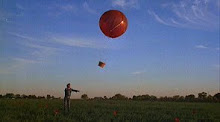
Auster has always been entranced by fate, chance, patterns; his characters seem to have a supernatural sense of their paths in life. The Music of Chance, which I admit I have not read as a novel, is a typical Auster work. Everything revolves around this idea of chance. The film starts with an intriguing introduction to one of our protagonists; a beaten and shabby looking man wandering along a highway in broad daylight. A garish powder blue suit is tattered and torn. This is Jack Pozzi (James Spader). A passing car pulls up, and Jim (Mandy Patinkin), a sturdy, solid man's man offers this stray cat a ride. Is it fate, or just coincidence? What makes Jim stop? This is textbook Auster. Already he has you guessing.
The pair spark up an unlikely companionship. We learn of Jack's career as an expert card player, in a bad patch, and Jim's former life as a fireman, but now driving aimlessly on the road to nowhere and everywhere. Again, these are familiar Auster characters; people pushed to the outskirts of society, often by themselves. Jim has a wealth of cash to burn and a happy-go-lucky streak, Jack has a failsafe plan to win a lucrative card game. It seems fate has brought them together. The two head off to a remote country estate, where a pair of eccentric old businessmen reside. This is the setting for the card game, and the turning point for the film. I won't spoil it, but things take a turn for the unexpected.
This is a very competent adaptation of a very good writer's work. Phillip Haas's direction is unpretentious and sophisticated; his finest move is letting the story and the characters work their magic. James Spader doesn't seem to be in much notable films these days, which is a shame because he made a spate of good films in the 90's. He brings a nervous, desperate energy to the scuzzy Jack Pozzi. Mandy Patinkin provides a perfect foil; the straight man, if you will. His performance is almost Bresson-ian in it's spareness; his masculine, angular features embodying a solid, moral centre in contrast to Pozzi.
A very solid and worthwhile adaptation, which carries the appeal of Auster's writing; it is absorbing, enigmatic and playful.
7/10
Thursday, 21 October 2010

Saturday, 5 September 2009
Public Enemies
For me, Michael Mann is one of the finest filmmakers in the world today, let alone Hollywood. Although working inside the often somewhat restrictive perimeters of the Hollywood studio system, Mann has sought to push the boundaries of cinema and pioneer new technologies. I would offer that David Lynch and Steven Soderbergh are the only directors rivalling him for him for Hollywood's most experimental filmmaker. It's no coincidence that these three directors have pursued a more documentary, lifelike aesthetic with the aid of digital cameras. He's made a career out of meaty, dramatic crime movies, reaching an artistic peak with 1995's Heat. His most recent films, Collateral and Miami Vice have made superb use of the HD cameras, allowing the audience an exhilarating foray into the seedy neon lit cities.
Public Enemies, his latest film, takes a step back to the 1930's and the gangster John Dillinger. The film focuses on Dillinger's hectic life as a serial bank robber, beginning with his release from a long prison stint, and ending on his infamous death outside a movie theatre. Dillinger was alleged to be something of a Clark Gable figure, dashing and charismatic, a modern day Robin Hood. He was known to be very media savvy, infuriating the FBI and the police force. Dillinger's main foes were FBI director J Edgar Hoover, a calculating, glossy man, and Melvin Purviss, the determined cop on his tail. As always, there is a romantic thread involving Dillinger's girlfriend Billy Frechette, who gets entangled in Dillinger's dangerous affairs.
I've often thought that Johnny Depp could never really cut it as a dramatic, dark figure. This does nothing to assuage that belief. In Donnie Brasco, Depp played a drug smuggler in a wannabe gangster epic. Like the film, Depp was passable in the role, but never really convincing. Never electrifying. Never really dangerous. Depp suffers the same fate here in Mann's film. I don't think we ever really get a good sense of why he was such a charismatic, or dangerous figure. To be honest, I think Johnny Depp is almost bland in straight roles- he comes to life in comedic roles. Instead of a Gable-alike, we get a surly, self absorbed criminal. His relationship with Billy (Marion Cottilard) also falls flat because we don't a get of sense of why it's so important that they should be together. If we compare this to Heat, the obvious reference point for a similar heist movie, that managed to juggle three different romantic threads, and each one seemed pertinent. De Niro's romance in particular was poignant, and yet there was little screen time dedicated to it.
If you want to make a believable romance, if you want the audience to care what happens to the relationship, then dedicate some time to developing it. The screen writer obviously wanted to eke some drama out of the situation, and make it an important part of the film, but forgot to make it relevant. It's by the numbers, cliched relationship drama. Either put some effort into it, or diminish it.
Christian Bale fared much better as Purviss, the rigid cop. The only main player who really convinced in his role, Bale brings in a steely eyed stubborness to his performance. I actually left the cinema almost unable to distinguish Bale from his role, such is the vigour with which he threw himself into it. It also helps that we recognise Bale as an extremely committed professional, so the role isn't such a stretch of the imagination, like nice guy Depp playing a cold hearted criminal. Billy Crudup is slightly odd as Hoover, although one suspects that was part of the plan. His rigid mannerisms and clipped voice are unnerring, but leave a good impression of the character.
Visually the film is, for me, inferior to previous works in that the muted, pale colours of the 1930's world do not lend themselves well to the digital cameras. Whereas Collateral and Miami Vice utilised the neon lights and the moody blue skies to great effect, creating a sense of city life, vibrant and uncertain, Public Enemies feels just a bit grainy. The roaming, hand held camera work also worked so much better in the previous films- is a period film the right platform for this edgy, almost ramshackle style? The most obvious answer would be to implement a stately, intricately composed aesthetic, similar to The Godfather or The Untouchables. Yet it served Mann so well on his previous films that I can't fault him for experimenting this time. The score was very hit-and-miss. Some might balk at the use of a rollocking, modern guitar piece in a 30's set film, though I thought it was well suited in the context of the car chase scenes. I had more issue with the correlation between visuals and sound at more mundane points. Basically, the composer didn't seem to take into account the type of film they were scoring- not the particular genre, but Mann's particular style. So often we were treated to great big orchestral sweeps set to....a few guys walking through a forest. It was almost like John Williams soundtracking an episode of Dispatches.
Despite all these faults, Public Enemies is far from a bad film. It's evocation of the era is impeccable, the acting is decent, and the gunfights are terrifically exciting and real. It's just nowhere near what Mann is capable of, and must be considered something of a disappointment because of this.
6/10
Il Divo
Paulo Sorrentino came to prominence and international acclaim with 2004's 'The Consequences of love', an intimate tale of a mysterious hotel dweller with dubious mafia connections. Il Divo, out this year in the UK, carries on and expands the subject of organised crime, this time in the account of Guiliano Andreotti. Andreotti was the Italian PM for several terms from 1946 right into the early 90's. The figurehead was part of the Democrazia Cristiana, a right wing party, and was frequently linked to the mafia.
Toni Servillio, the star of 'Consequences', turns in another great performance as the Italian leader. The PM shuffles around meekly the grand halls of residence, a deeply serious, almost boring man, like Nosferatu after retirement. Servillio's hunched physicality is faultless and the actor manages to steer clear of overdramatizing the character, although Andreotti himself has said he is even more boring in reality.
The timidity of the central character is offset by a cast of colourful supporting characters; the volatile hardman, the flamboyant spin doctor, the ranting priest-members of Andreotti's far reaching circle. The film shows how Andreotti was able to draw influence through various different strands-religious figures, doctors, lawmen, the police- and later we find out, the criminals.
What really makes this film stand out though, is Sorrentino's remarkable gift as a stylist. The film is a technical tour-de-force, all gliding camera tracks and snappy edits. Before the film started I was preparing myself for a much more muted effort than 'Consequences'- obviously Sorrentino would go for a much more serious, stately style to suit the political film format. After the first 30 seconds, my fears were completely allayed. The camerawork, editing and soundtrack are sophisticated and thrilling, Sorrentino again showing a creative playfulness in his filmmaking that is certainly lacking in most films.
I wouldn't say Il Divo is the definitive account of Andreotti's career, as it seems to touch only only on certain periods, and stylistically it almost overshadows the story. However, I think most people would agree that we do get a sense of the man and the party, the conspiracies and the lies surrounding him.
8/10
Primavera Sound 2009
Okay, it was amazing. Terrific. Euphoric. Blissful.
I'll start off on Wednesday night. Traversed through La Ramblas, which was only a short walk from our apartment- met up with my flatmates and walked around the flashy apartment a bit numbstruck. I could have stayed their forever. Of course, it was the Champions League final, and as a Man Utd supporter, Barcelona was a strange place to be. We found a shabby cafe to watch the match (awful match), and attempted to avoid the throngs of horn-toting Barca fans. It was kinda funny, we ended up being closed into alleyways while policemen fired off rubber bullets as warnings. Apparently there were riots later.
Thursday we played some scrabble and then set off for the festival site. The forum is by the sea, a huge site featuring various stages and courts, all concrete. As a festival goer comfortable with the grassiness of Latitude and Leeds, it was a little disconcerting at first. My least favourite stage perhaps, by the food court, was the Pitchfork one. We started off there catching a set from Women. To be honest they were a little flat, not terrible, but not much stage movement, not much dynamism. Black rice was a highlight, but the other material didn't shine.
I'd decided before the festival to research as much of the line up as possible, and The Bats were ones to look out for. Recently reformed, they could be classed alongside bands like The Chills and The Church, although they're from New Zealand. Like those bands mentioned, they use a clean, jangly guitar sound but what really came out of the set was the cool grooves. Very tight, seemed to enjoy themselves, and the Vice stage right by the water was a lovely and appropriate setting for them.
Sadly, I missed the Vaselines. The ticketing machines, for at least a few crucial parts of the festival, were a joke. The idea was that you'd go buy some drinks tickets at the machines (and a few staff), and then exchange these for drinks. Alright, there were much less queues for the bars, but perhaps only because no one could get drinks? Anyway, a friend got stuck in a massive long queue, and we missed the fucking Vaselines. I caught one or two songs and they sounded great, not at all fey and insubstantial, but punky and fun.
Next up was Yo La Tengo. Only at Primavera would a band like this be given a slot on the Estrella Dam stage. This stage was basically for the biggest bands of the three days. I'd seen them before at the Southbank, soundtracking some marine films, but this was the real deal. Sugarcube, From a motel 6, Shaker, Tom Courtenay, it was all there. The band were excellent, the crowd was going wild, just a wonderful moment.
I managed to glimpse a bit of the Jesus Lizard, but missed the sight of a crowdsurfing David Gow. It looked pretty good from what I saw, but I'm not a massive fan.
My Bloody Valentine at the Estrella Dam was my musical highlight. The sound was glorious, a sea of devotees and we were at the front peddling our own form of prayer (vigorous headbanging). I think Only Shallow was the opening number, probably my favourite, but To here knows when and When you sleep were indescribably euphoric as well. It was great to see the band play into the indigo Barcelona sky as well, much preferable to the stuffy gig at the Roundhouse last year, and much better sound to boot.
Where do you go from MBV? Dancing to Aphex Twin? Yeah, OK! The enigmatic Mr James played to a throbbing crowd at the Rock Delux, the 2nd biggest stage. It's really great because it's lined like a Roman coliseum with stone steps, so you can just sit and watch lazily. We had to dance, obviously, and AT's set was dominated by his more upbeat, dancier compositions, with little of the ambient material that I favour.It didn't matter though, it was still incredibly fun.
Missed Squarepusher for reasons unknown, but found solace in the ATP stage, where DJ's played alternative rock hits incessantly, and awkward indie kids united in love of Debaser and I wanna be your dog, surrounded by beautiful people wearing Sonic Youth t-shirts, and looking up at the peach pastel sky as the sun came up. The Jagermeister's and JD and cokes had worked their magic, and everybody was flailing and shimmying happily. A superb end to the first night.
Friday began with Crystal Stilts, who were on top form. Saw them at the Barden's Boudoir a few months prior, and they were good, if a little lazy, but here in the sun their jangly shoegaze was rather joyous. They even admitted "this was the best we've sounded for ages".
Vivian Girls followed, pretty decent, nothing too special. The girl trio are pretty energetic performers and change instruments, but some of their tunes felt a bit lacking somehow, didn't have the punch of their debut. I would have liked to have seen Pains of being pure at heart, to round off a trio of retro noise makers, but y'know, MBV clashed with them, so it was a no contest.
On the Rock Delux was Spiritualized, AKA Jason Pierce with his band, including a couple of soul backing singers. I enjoyed their set a lot, but for me a band like Spiritualized works best as a visceral experience, so I would have liked some kind of hypnotic visual background, more stage presentation, and perhaps a little less sun (thanks God). The songs drifted along so slowly it was almost unbearable at times, Pierce's pained vocals stretching out every note. Shine a light was sublime, but the real highlight was midway through a song, and suddenly everything goes widescreen, and the guitars burst into life, the drums crash. Where the hell did that come from?
MBV again? Oh, you do spoil us! This time they were booked into the auditorium just off site. It's a large assymetrical, angular, black building. I unfortunately arrived late so was left with a seat on the top tier at the back. It didn't matter too much, but I would have loved to have been sitting in the front row with Sometimes boring into my ears. The sound was absolutely spectacular, ricocheting around the blackness of the venue gloriously. You made me realise was terrific. I felt a tinge of disappointment that MBV weren't playing the next day.
The final day got off onto a good start with a ramshackle set by Ariel Pink's Haunted Graffiti. He really is a freak. I'd heard he was a bit reclusive, but yeah, really odd (in the best way possible). Wearing a feminine, loose stripy t shirt and shorts, he looked like he was bridging the gap between skater boy and drag queen. I'm only really familiar with his album The Doldrums, so much of it was new to me, but it was surprisingly psychedelic and noisy. There were about 5 or 6 other members, and even a couple of Vivian Girls joined them onstage at one point. The vocal interplay was great as well.
I stayed to watch Jesu at the ATP stage afterwards after hearing good things about them. I was pretty impressed, I liked the doomy soundscapes, almost sounding like ominous synths and the processed beats complimented them well. On the minus side, the two guys lacked a bit of stage presence (as is commonly the way with post rock acts) and the vocals were a bit flat. But otherwise, decent.
Michael Nyman in the auditorium was next up. We got better seats this time, so I felt more involved with the performance. I'm a big admirer of Nyman's collaborations with Peter Greenaway, so I was really looking forward to him (and importantly his band) playing. I think there must have been around 18 in his band, all sat on a platform, while Nyman faced away to their side. The music was sublime, and really quite innovative for 'classical' music. The musicians on strings were shredding it, really shredding it. Marnie Stern would have been proud. The horn section and Nyman's piano work was also pitch perfect. The highlight for me was definitely 'Fish Beach', possibly my favourite Nyman track. Achingly beautiful and simple. This set in particular showed how diverse Primavera was-something you might not find in a lot of festivals.
I caught quite a bit of Neil Young on the Estrella Dam stage. The crowd seemed to be really into it, and I was nodding my head happily along to a few of Young's hits. I remember Cinnamon Girl and Heart of gold got good receptions, and the man seemed on fine form. Even had an artist creating some improptu painting upon stage with him.
I had to leave Deerhunter pretty early on, due to someone drinking too much Jagermeister, which is a shame as I would have liked to have seen them in these kind of circumstances. I saw them a couple of weeks back, and I can tell you that the bassist seemed a lot happier in sunny Spain than a dingy London venue.
Caught most of Sonic Youth, and enjoyed them to an extent. Kim Gordon was the real heartbeat of the band, bellowing out determinedly at the crowd, and they seemed pretty tight. But it did make me realise that I don't really like their music that much. Just too discordant and harsh for me, even though I'm a fan of bands like Codeine and Slint, this doesn't really sit with me.
A smattering of Simian Mobile Disco and then back to a final hurrah with the ATP stage DJ's. Again, wonderful. Danced like a loon to the best of alternative 90's rock, then sat out the ones I didn't know. Watched people go crazy dancing to soul classics. A great end to the festival.
Other things that happened to me:
-Absolutely deranged girl sidles up beside me during Spiritualized, completely wasted and wearing only a bikini top and shorts. On one wrist, she'd sellotaped 6 or 7 of those shot tubes to herself, on the other there was a paper cup sellotaped round her wrist. I thought she might have been a drug addict. It got even weirder when she started nudging me, then whispers "It doesnt matter if you're naked or not, it's ok to be naked", and starts to pull up my shirt. This, all during the daytime performance of Spiritualized. I actually had to jog to the front to get away from her. The funny thing was, we exchanged a knowing glance the next day, and she looked completely normal and pretty embarrassed.
-Meet the Faith Healers through a mutual acquaintance, realise they were in Quickspace, the singer tells me I'm 'pale but pretty'.
-My friend decides to drink 17 Jagermeisters over the course of an hour. Misses Sonic Youth, Neil Young, Deerhunter, completely out of it, throws up on himself.
-Awkward handshake with Eddie Argos
Just the best.
Thu 28 May – Primavera Sound 2009
Toto the hero
I watched this about a month ago. It was pretty good.
It's a Belgian movie about a young boy called Thomas. As a baby, Thomas is involved in a hospital fire- everybody flees the scene, but when they go back to collect Thomas, they cannot differentiate between him and the baby in the next cot. His mother picks up the wrong baby, meaning Thomas grows up in a modest household, while the other baby, Alfred, grows up across the street in a big, lavish house. This is the basic thread of the film. Thomas ends up resenting Alfred, and this takes on a lifelong obsession.
The film, directed by Jaco van Dormael, is almost like a piece of magical realist cinema in that it frequently soars into flights of fancy, Thomas' childhood populated by surreal daydreams. It is this dreamlike quality that lifts the film up above usual coming of age tales. The wide-eyed wonderment of youth is artfully and emotionally evoked. Thomas contends with young love (his 'sister' Evelyne) and the archetypal bully (Alfred). The town neighbourhood is sentimentally portrayed in rich, golden hues and perfect houses and yards. It's not 'til later in the film does Thomas realise the reality of adulthood, and the exteriors become dull.
Still obsessed with the perceived theft of his luxurious life, the adult Thomas struggles to make his way in life- he tolerates his boring job, and pursues a woman who is the spitting image of Evelyne, in a similar way to the characters in Vertigo. Chance (but obviously important) meetings with Alfred crop up, allowing comparison between their two diverging paths. It's not entirely easy to categorise Toto the hero; there are moments of humour, but this is perhaps over powered by melancholy and heart ache; it works well as a coming of age tale, but also has a vested interest in old age and mortality. Whatever it is, it is a quite unique portrait of a bittersweet life.
7.5/10
The Pillow Book
The Pillow Book is a Peter Greenaway film from 1996. Set in Japan, the story tells of a young Japanese woman who tries to find a suitable lover to write on her body, and vice versa. We learn how this obsession was founded in a series of short flashbacks to her youth. Her father, a writer/calligrapher, celebrates her birthday each year by writing a few verses on her back. Once she grows up, Nagiko (Vivian Wu) seeks to carry on her father's tradition.
Nagiko ends up prostituting herself out in exchange for the opportunity to experiment with her body calligraphy. She realises the white skinned Europeans act as a much better 'paper' to write on, which leads us to a chance meeting with Jerome (Ewan McGregor), a British writer. The two begin a volatile relationship, and when the idea of money and fame appears tragedy inevitably strikes.
The Pillow Book is certainly not up there with Greenaway's best films. It is an interesting experiment, not a failure, but not an overwhelming success. Like much of his other work, Greenaway mixes art and literature, this time calligraphy the focus of his endeavours. The decoration or manipulation of the body is also present in the cooked body of 'The cook, the thief...' and the photographed decay of the brothers in 'A Z and two noughts'. Greenway has an obsession with death and decay, stemming from his interest in the baroque art movement. The two lovers and their downfall is also very Greenaway, based on the German tragedies of the 17th century.
Although the film is well composed and atmospheric, the visuals are not of the same standard of previous works. The dramatic lighting, strong colours and lavish sets are disposed of for a more toned down, contemporary setting. The film is quite a departure in this regard. The performance by Vivian Wu is strong, though I wouldn't say I ever really cared for her, but Ewan McGregor looked quite out of place, his appearance irritating me at every turn. So the romantic aspect of the film had no where near the power of the lovers in 'The cook, the thief...', which was genuinely moving (yeah, even in a Greenway film).
I'd give this a 6.5/10.
Let The Right One In
Let The Right One In is a Swedish vampire film directed by Tomas Alfredson. It tells the story of Eli and Oskar, two young kids who strike up a friendship, despite Eli's mysterious background.
Set in a snowy Swedish town, Let The Right One In takes the intriguing path of demystifying the vampire genre. It's more Ken Loach than say Nosferatu, more interested in the lives of the townsfolk than cheap scares. Oskar, a blond, timid child, lives with his mother in a block of flats. Terrorised by bullies, Oskar finds solace in the arrival of Eli and her 'father'. With the aid of a rubix cube, the two begin to grow fond of each other.
Then, of course, there's the issues of the bloodsucking. The film takes a realist view at the existence of a vampire; the social isolation, the conflict between forging relationships and the need for blood, and the tricky task of getting it. There's a couple of grizzly but discreet scenes where the father goes off to slaughter a couple of townsfolk. Instead of the horrific yet romanticised slayings of vampire films, we get bumbling efforts, riddled with self loathing and fear.
Much of the film rests on the conflict between Eli's vice and her relationship with Oskar; is it dangerous to be get too close to a creature of the night? The young actors performances portray a touching relationship of loneliness and longing, and her father presents a surprisingly melancholic figure. Not only does the film work on a dramatic front as the chills and thrills puncture the screen every so often. The chilly town is a fitting venue for the story.
It's quite beautifully shot as well; I sat mesmerised as the gentle snow dropped down over the opening credits. The icy landscape is captured vividly and the music, though sometimes a little heavy handed, added to the ambience.
8/10
Subscribe to:
Posts (Atom)