KILL ALL HIPPIES.
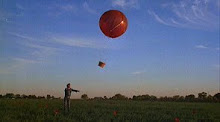
Punishment Park is an anti-establishment film directed by Brit director Peter Watkins. Like Watkin's 'The War Game', Punishment Park takes a 'what if?' situation and attempts to create it as convincingly as possible. Here, the 'what if?' is what if the US government had established a prison camp in the desert where anti-US protesters were forced to tackle the desert wilderness as punishment. Similar to 'Battle Royale', the outcasts are cast out onto an unknown terrain, but this time their target is a US flag 50 miles away, and they have 3 days to reach it.
The victims are all hippies and rebels, black and white, mostly young. The film shows a 1st group who are being given trials, and a second group who are forced into the desert. Of course, the trials are unfair and biased, led by a jury of right wingers and supposed experts to back up their ideals. These include community leaders, businessmen and psychologists. All of the cast are played by non-actors, or people with little acting experience, and the whole film is told in a faux documentary manner.
The film mixes narrative sequences with interviews (invented), in which various sides get to expend their own views. So we see the hippies condemning the brutality of the state and considering their own pacific ways, the jurors who lay the blame on the youths and the police overseeing the experiment with indifference but a trigger happy state of mind. The film is not a rounded portrait of all sides-Watkins portrays the protesters as sane minded individuals who are rightfully angry at their government, while the jurors and the police appear heartless and hypocritical.
During the trials the protesters (or the filmmakers) are give a platform to air their views on America at that time- focusing on everything from the rich-poor divide to the environment to racial tensions. In fact, a lot of the issues raised in the film are still extremely pertinent today, perhaps even more so. With the spectre of Vietnam towering over the film, it is easy to compare the situation with the US invasion of Iraq.
The film is excellently shot the vivid heat waves of the desert captured in the cinematography, and the documentary shooting style feels authentic. Our lecturer pointed out some issues the film raised about documentary passivity, as the fake camera crew are confronted with some moral dilemmas. It reminded me a little of Oliver Stone's 'Natural Born Killers', where a killing spree across the desert is tracked by a camera crew.
I thought this was a very interesting film. It was passionate about the issues raised in the film, an engaging watch and still carries some weight today.
7.5/10
Saturday, 5 September 2009

Cries and Whispers
Along with 'Faces', I saw this at a special screening in London (which I'm not sure I was allowed at). I'm glad I did see it on the big screen-it's a great film and it deserves a wider viewing.
The basic story is that of three Swedish sisters living in their deceased parents grand house. It is a period piece set around the turn of the century. The story revolves around Agnes, terminally ill and bed ridden, and the two sisters, Karina and Maria, who along with a devoted maid are left to care for her. At the beginning of the film it is established that Agnes is mere days of dying. The trauma of family tragedy brings sibling tensions to the fore, and each sister is evoked in a flashback to an important point in their life.
For Agnes, it is her mothers mental fragility and coldness towards her. Karina is damaged by failed adulteries with the family doctor, while Maria looks back to her oppressive relationship. The illness acts as a trigger for harrowing and damaging past events to rear their ugly heads. The flashbacks correlate with the present day; we see how past trauma has informed their current state and behaviour. The sisters are resentful and cold toward each other. It is an uncomfortable, claustrophobic household.
Bergman's film is vivid and and haunting in its evocation of mood and tension of the household. The mise en scene works brilliantly to imitate the characters mental states and the raw emotion running through the building. The women glide around in long, ghostly white and funereal, foreboding black gowns. The walls are painted blood red and contrasting pure white- love and anger. The art designer has done well to compose a scene that is clearly identifiable of the time period yet simple and sparse enough to remain timeless.
I found the atmosphere of the film highly strange. It was a constant build up of tension, hints of the supernatural and even horror. Bergman succeeds in melding the family tensions with the foreboding atmosphere. It could work as a great mood piece, but the characters are extremely well drawn out and engaging. There are a few moments of real terror, but not in the conventional sense. These moments are borne out of inner turmoil and result in self mutilation, rejection and bewilderment.
Quite possibly the best Ingmar Bergman I have seen so far.
9/10
The basic story is that of three Swedish sisters living in their deceased parents grand house. It is a period piece set around the turn of the century. The story revolves around Agnes, terminally ill and bed ridden, and the two sisters, Karina and Maria, who along with a devoted maid are left to care for her. At the beginning of the film it is established that Agnes is mere days of dying. The trauma of family tragedy brings sibling tensions to the fore, and each sister is evoked in a flashback to an important point in their life.
For Agnes, it is her mothers mental fragility and coldness towards her. Karina is damaged by failed adulteries with the family doctor, while Maria looks back to her oppressive relationship. The illness acts as a trigger for harrowing and damaging past events to rear their ugly heads. The flashbacks correlate with the present day; we see how past trauma has informed their current state and behaviour. The sisters are resentful and cold toward each other. It is an uncomfortable, claustrophobic household.
Bergman's film is vivid and and haunting in its evocation of mood and tension of the household. The mise en scene works brilliantly to imitate the characters mental states and the raw emotion running through the building. The women glide around in long, ghostly white and funereal, foreboding black gowns. The walls are painted blood red and contrasting pure white- love and anger. The art designer has done well to compose a scene that is clearly identifiable of the time period yet simple and sparse enough to remain timeless.
I found the atmosphere of the film highly strange. It was a constant build up of tension, hints of the supernatural and even horror. Bergman succeeds in melding the family tensions with the foreboding atmosphere. It could work as a great mood piece, but the characters are extremely well drawn out and engaging. There are a few moments of real terror, but not in the conventional sense. These moments are borne out of inner turmoil and result in self mutilation, rejection and bewilderment.
Quite possibly the best Ingmar Bergman I have seen so far.
9/10
Faces
I think this one of Nick Cassavetes earlier films. It was released in 1968.
The film concerns the exploits of a wealthy American couple. John Marley plays an advertising guy, while his wife (Lynn Carlin) stays at home. The film takes the form of a series of episodes in which the two main characters diverge down different roads. Marley's character is seen partying with friends and visiting a prostitute (Gena Rowlands, Cassavetes wife), an escape from his meaningless life. The advertising business is traditionally seen as an evil profession in film, and it seems inevitable that Marley is unsatisfied by his work. He goes home to his wife, a burgeoning alcoholic, and tells her he wants a divorce. The wife is similarly disillusioned and the film shows that both characters are set on a path of self destruction. American Beauty would be a valid contemporary companion piece; a mid-crisis engulfing a married couple and the failure of the American dream. It's a well worn theme but Cassavetes film is much more potent than others.
I suppose the most interesting thing about the film is the way it is set out and the construction of the scenes. There are only about 5 or 6 locations in the whole film. The film is a collection of extended scenes featuring long takes. At the prostitute's home for example, Marley and his friend/business partner are joking and playing around with Rowland's character, attempting skits and falling over. The action seems refreshingly real; Cassavetes style seems to be brief the actors on the scenes and then let them improvise. Thus long takes, sometimes inaudible dialogue but a few special moments and some great interaction between the actors. The film would fall spectacularly flat if it wasn't for the flawless performances on show. Marley is a silver fox, desperate and disillusioned, trying to inject some fun into his existence but falling upon menial vices. Rowlands is very good as the 'voluptuous' seductress, balancing the line between aloof and vunerable. But for me the standout performance is Carlin as the suffering wife. Much of her performance is based on subtle facial nuances and eye contact. Like Marley, she engages feebly with sex and drugs to numb the pain, but I felt the most sympathy for her plight, due to Carlins performance.
The film is shot in black and white and with an intrusive hand held camera bringing the audience closer to the action and capturing the improvisational tone. Very humane, very engaging and very well shot.
8/10
The film concerns the exploits of a wealthy American couple. John Marley plays an advertising guy, while his wife (Lynn Carlin) stays at home. The film takes the form of a series of episodes in which the two main characters diverge down different roads. Marley's character is seen partying with friends and visiting a prostitute (Gena Rowlands, Cassavetes wife), an escape from his meaningless life. The advertising business is traditionally seen as an evil profession in film, and it seems inevitable that Marley is unsatisfied by his work. He goes home to his wife, a burgeoning alcoholic, and tells her he wants a divorce. The wife is similarly disillusioned and the film shows that both characters are set on a path of self destruction. American Beauty would be a valid contemporary companion piece; a mid-crisis engulfing a married couple and the failure of the American dream. It's a well worn theme but Cassavetes film is much more potent than others.
I suppose the most interesting thing about the film is the way it is set out and the construction of the scenes. There are only about 5 or 6 locations in the whole film. The film is a collection of extended scenes featuring long takes. At the prostitute's home for example, Marley and his friend/business partner are joking and playing around with Rowland's character, attempting skits and falling over. The action seems refreshingly real; Cassavetes style seems to be brief the actors on the scenes and then let them improvise. Thus long takes, sometimes inaudible dialogue but a few special moments and some great interaction between the actors. The film would fall spectacularly flat if it wasn't for the flawless performances on show. Marley is a silver fox, desperate and disillusioned, trying to inject some fun into his existence but falling upon menial vices. Rowlands is very good as the 'voluptuous' seductress, balancing the line between aloof and vunerable. But for me the standout performance is Carlin as the suffering wife. Much of her performance is based on subtle facial nuances and eye contact. Like Marley, she engages feebly with sex and drugs to numb the pain, but I felt the most sympathy for her plight, due to Carlins performance.
The film is shot in black and white and with an intrusive hand held camera bringing the audience closer to the action and capturing the improvisational tone. Very humane, very engaging and very well shot.
8/10
Funeral Parade of Roses
Now, I haven't seen many Japanese films about transvestites from the 60's but I think this would definitely get into my top 5. Probably.
I picked this up out of curiosity, and the allure of a mixture of Japanese culture and the strange avant garde format. I was pretty much satisfied in both ways. The director was one Toshio Matsumoto, who I may never hear of again, but maybe not. The two leads were real life transvestites, both apparently appearing in some Kurosawa pictures around the same period. The basic story is that the two transvestites are both vying for the attentions of the owner of the club they work at, a gay gangster who peddles drugs on the sly. One of them, Eddie, and the owner make plans to get rid of Leda, the other. Meanwhile, the police are cracking down on the underworld clubs that the trio are involved in.
Unusually, the film mixes in real interviews with the cast into the fiction narrative. Eddie and Leda are both questioned frankly about their sexuality and lifestyle. A large part of the film seems to focus on sexuality and tolerance. I can't remember seeing many films about the gay/transvestite lifestyle in modern times, let alone in 60's Tokyo. There also seems to be sections where we witness a film crew filming some scenes, and watching them back in postmodern twist. There's a lot of overlapping layers to the film where fiction merges with reality.
The other striking aspect of the film is it's experimental format. On the description of the film, it states that the film was made at a time when anything was possible in cinema. This is the ethos of for the making of this film. It utilises many avant garde filmmaking techniques. Even Kubrick was impressed enough by the film that he took some tricks from the film. In one scene, the gangster is interrupted by a police raid. Hurriedly he tries to pack up and leave his office, but it is filmed in fast motion with the zippy music overlayed, just like in 'A Clockwork Orange'. It is also quite possible that Kubrick was influenced by the urban gang fights- a catfight ensues in the city centre.
While I admired the ethos of the film and enjoyed the experimental nature of the format, I didn't really engage with the characters or story that much. The story was simple and easy to follow, and the characters had elements of empathy, but it wasn't particularly satisfying drama-wise. It works best as a visually striking, experimental piece of work.
6.5/10
I picked this up out of curiosity, and the allure of a mixture of Japanese culture and the strange avant garde format. I was pretty much satisfied in both ways. The director was one Toshio Matsumoto, who I may never hear of again, but maybe not. The two leads were real life transvestites, both apparently appearing in some Kurosawa pictures around the same period. The basic story is that the two transvestites are both vying for the attentions of the owner of the club they work at, a gay gangster who peddles drugs on the sly. One of them, Eddie, and the owner make plans to get rid of Leda, the other. Meanwhile, the police are cracking down on the underworld clubs that the trio are involved in.
Unusually, the film mixes in real interviews with the cast into the fiction narrative. Eddie and Leda are both questioned frankly about their sexuality and lifestyle. A large part of the film seems to focus on sexuality and tolerance. I can't remember seeing many films about the gay/transvestite lifestyle in modern times, let alone in 60's Tokyo. There also seems to be sections where we witness a film crew filming some scenes, and watching them back in postmodern twist. There's a lot of overlapping layers to the film where fiction merges with reality.
The other striking aspect of the film is it's experimental format. On the description of the film, it states that the film was made at a time when anything was possible in cinema. This is the ethos of for the making of this film. It utilises many avant garde filmmaking techniques. Even Kubrick was impressed enough by the film that he took some tricks from the film. In one scene, the gangster is interrupted by a police raid. Hurriedly he tries to pack up and leave his office, but it is filmed in fast motion with the zippy music overlayed, just like in 'A Clockwork Orange'. It is also quite possible that Kubrick was influenced by the urban gang fights- a catfight ensues in the city centre.
While I admired the ethos of the film and enjoyed the experimental nature of the format, I didn't really engage with the characters or story that much. The story was simple and easy to follow, and the characters had elements of empathy, but it wasn't particularly satisfying drama-wise. It works best as a visually striking, experimental piece of work.
6.5/10
The Son's Room
This was something I was asked to watch for my screenwriting workshops. I'm not that informed about Nanni Moretti, although I know a little. He's one of Italy's biggest exports and before this film was famed for his comedies. Here he acts, writes and directs in a drama about a grieving Italian family.
Moretti plays the father of the family, a placid shrink who takes life at a leisurely pace. He appears to live a relatively contented life with his pretty wife and their two teenage children. Towards the beginning of the film his son is accused of stealing something from school and the father is called in to deal with the situation. The father is rational and calm about the situation, quietly trying to dissect the truth behind the lies. Perhaps this is a merging of his work as a shrink with his personal life. Although there are many small events like this in the film which seem unimportant, they actually help us gain insight into the character and the way they deal with situations.
Moretti's character gears his children (and their reluctant mother) towards sport. The girl plays netball for her local team, the boy plays tennis and the father goes running regularly. Again, could this be the idea of the shrink filtering through? In one of his meetings with a bored, hyperactive patient he recommends that she takes up a sport to fill her time. He consoles her by saying he too is boring. The suggestion is that he perhaps channels his emotions into stimulants such as his sport and his work.
The patients provide a juxtaposition against his home life. Here in his office he tends to sex addicts, suicidals and attention seekers, all looking for some relief. His family in contrast seem well adjusted and fully functional. Often the scenes are cut short to a few exchanged words; the patient will talk of their problems and maybe criticise the shrink, then the shrink will offer a reason or solution. There is little resolution to the characters problems, which seems a more realistic portrait of psychiatry
The cosiness of the film is shattered when the son is killed in a diving accident. Moretti is guilt ridden because he feels he could have prevented the death. The relationship between the father and mother disintegrates, and the small cracks at the start of the film emerge as canyons. A comparison could be made with the 2001 American drama 'In the bedroom'. They both deal with the aftermath of a son's death. I think 'The Son's Room' is a better film, because it is more emotionally engaging and the central character is more interesting. Both films though, are somewhat stylized in their depiction of family grievances. They tell the story, but only offer a small part of the process.
What I also found interesting about Moretti's film was the overall look of the film. There was little artistic licence in the lighting of the film-it seemed to me more TV soap than film. The colour pallette is bright and clean, and the mise-en-scene cosily sketched out. It's not really a detraction necessarily, but it did catch my eye.
7/10
Moretti plays the father of the family, a placid shrink who takes life at a leisurely pace. He appears to live a relatively contented life with his pretty wife and their two teenage children. Towards the beginning of the film his son is accused of stealing something from school and the father is called in to deal with the situation. The father is rational and calm about the situation, quietly trying to dissect the truth behind the lies. Perhaps this is a merging of his work as a shrink with his personal life. Although there are many small events like this in the film which seem unimportant, they actually help us gain insight into the character and the way they deal with situations.
Moretti's character gears his children (and their reluctant mother) towards sport. The girl plays netball for her local team, the boy plays tennis and the father goes running regularly. Again, could this be the idea of the shrink filtering through? In one of his meetings with a bored, hyperactive patient he recommends that she takes up a sport to fill her time. He consoles her by saying he too is boring. The suggestion is that he perhaps channels his emotions into stimulants such as his sport and his work.
The patients provide a juxtaposition against his home life. Here in his office he tends to sex addicts, suicidals and attention seekers, all looking for some relief. His family in contrast seem well adjusted and fully functional. Often the scenes are cut short to a few exchanged words; the patient will talk of their problems and maybe criticise the shrink, then the shrink will offer a reason or solution. There is little resolution to the characters problems, which seems a more realistic portrait of psychiatry
The cosiness of the film is shattered when the son is killed in a diving accident. Moretti is guilt ridden because he feels he could have prevented the death. The relationship between the father and mother disintegrates, and the small cracks at the start of the film emerge as canyons. A comparison could be made with the 2001 American drama 'In the bedroom'. They both deal with the aftermath of a son's death. I think 'The Son's Room' is a better film, because it is more emotionally engaging and the central character is more interesting. Both films though, are somewhat stylized in their depiction of family grievances. They tell the story, but only offer a small part of the process.
What I also found interesting about Moretti's film was the overall look of the film. There was little artistic licence in the lighting of the film-it seemed to me more TV soap than film. The colour pallette is bright and clean, and the mise-en-scene cosily sketched out. It's not really a detraction necessarily, but it did catch my eye.
7/10
In Bruges
Looking back to last year, In Bruges cropped up heavily in polls of the years best. It was Martin McDonagh's debut film after a successful career as playwright/director, and he got off to a good start.
The stars are Colin Farrell and Brendan Gleeson, both revered Irish actors who have broken into Hollywood, in their own way. The two play a pair of hitman sent off to the Belgian city of Bruges, in waiting of instructions from their mysterious paymaster. The audience is not told of why they are here, nor what is expected of them. I recently re-watched The Third Man, Carol Reed's classic noir film. Both films are set in beautiful but flawed European cities and hinge on the enigma of an unknown third party. of course, In Bruges cannot conceivably match the heady heights of that film, but it's impressive enough not to pale against it.
It is not a typical buddy movie, nor could be classed simply as a thriller, though it has claims on both genres. The relationship and banter between the two hitmen is sparky and witty, like Pulp Fiction but with real characters instead of cartoons. Like Pulp Fiction, In Bruges mixes humour with unflinching violence and gratuitous profanity. But McDonagh actually carves out some humanity in these characters, and later on in the film we see the characters having to take on some serious moral issues.
There is also a bit of conflict between the finesse of the city, it's culture and the screenplays distinctly un-PC take on the modern world. Farrell's character frequently refers to Bruges as a "shithole" (something the city officials didn't take to kindly to!), but like Gleeson's character we cannot help but marvel at the pebbled streets, the arched bridges and grand cathedrals sensitively captured in lingering montages. The city is described as a 'fairytale world'- the sky is bleached out in otherworldly whiteness giving it an ethereal feel.
So, the film features a great, quotable script and an exciting mix of violence and humour, but there's also a few emotional bombshells thrown into the mix as well. The finale, though I'll try not to give any spoilers away, is hard hitting but touching. My only qualm with the ending is that I think a gradual realisation or revelation is much more rewarding than a split second jolt, which the finale erred on the side of. But this is only a small niggle in a fine, unpredictable British film.
8/10
The stars are Colin Farrell and Brendan Gleeson, both revered Irish actors who have broken into Hollywood, in their own way. The two play a pair of hitman sent off to the Belgian city of Bruges, in waiting of instructions from their mysterious paymaster. The audience is not told of why they are here, nor what is expected of them. I recently re-watched The Third Man, Carol Reed's classic noir film. Both films are set in beautiful but flawed European cities and hinge on the enigma of an unknown third party. of course, In Bruges cannot conceivably match the heady heights of that film, but it's impressive enough not to pale against it.
It is not a typical buddy movie, nor could be classed simply as a thriller, though it has claims on both genres. The relationship and banter between the two hitmen is sparky and witty, like Pulp Fiction but with real characters instead of cartoons. Like Pulp Fiction, In Bruges mixes humour with unflinching violence and gratuitous profanity. But McDonagh actually carves out some humanity in these characters, and later on in the film we see the characters having to take on some serious moral issues.
There is also a bit of conflict between the finesse of the city, it's culture and the screenplays distinctly un-PC take on the modern world. Farrell's character frequently refers to Bruges as a "shithole" (something the city officials didn't take to kindly to!), but like Gleeson's character we cannot help but marvel at the pebbled streets, the arched bridges and grand cathedrals sensitively captured in lingering montages. The city is described as a 'fairytale world'- the sky is bleached out in otherworldly whiteness giving it an ethereal feel.
So, the film features a great, quotable script and an exciting mix of violence and humour, but there's also a few emotional bombshells thrown into the mix as well. The finale, though I'll try not to give any spoilers away, is hard hitting but touching. My only qualm with the ending is that I think a gradual realisation or revelation is much more rewarding than a split second jolt, which the finale erred on the side of. But this is only a small niggle in a fine, unpredictable British film.
8/10
Beau Travail
Beau Travail is Claire Denis's film about a troop of Legionnaires training in Djibouti. The film is apparently a retelling of Herman Melville's 'Billy Rudd'.
Denis Lavant stars as officer Galoup, who narrates his own downfall through a series of flashbacks. Michel Subor plays the watchful commander, Galoup's boss, while Gregoire Colin plays Sentain, the young Legionnaire who acts as the trigger for Galoup's downfall.
At the beginning Galoup seems in control of his 'flock' and protective of them. Through a series of scenes of Galoup doing his daily chores, his intensive cleaning of his uniform and ironing, we see that he is indebted to the Legionnaire lifestyle. It is this life which gives him purpose and structure in an existence which would otherwise be lacking.
When a young charge is introduced into his troop, Sentain, he feels oddly resentful towards him. Sentain is an enigmatic, sensitive young man who Galoup feels doesn't belong to the army. Sentain is quietly influential among the troops, and there is simmering tension when word gets out that Galoup is out to get him. However, the situation escalates when Sentain saves a fellow soldier in a helicopter crash, becoming a hero amongst the troops, and more gratingly for Galoup, gaining the respect of the commander. At this point Galoup waits eagerly for the moment to take Sentain apart.
But this plot description only tells half the film. To read this description, you might think this was simply a mere drama. Beau Travail has a distinctly odd atmosphere. The bright, vivid images of the Djibouti landscapes, the sandy deserts and the pools of water, are filmed in lingering takes taking on an elegiac, meditative quality. We are made to examine the images and the characters faces for clues, as Denis gives little away in the form of script. When we are told characters thoughts or feelings through dialogue, it is often strangely frank.
The performances from the three leads are all quite magnetic and intriguing. Thinking back to them, I realise that they all share distinctive faces; Lavant dinosaur and rubbled, Subor rugged and shrewd eyes, and Colin oval and angelic. When we watch them, we are looking for insights into their mindsets.
One of the most memorable aspects of this film are the striking scenes of the nightclub placed throughout the film. In these scenes, we see various soldiers from the troop dancing with swaying Djibouti girls, all facing disconcertingly towards the camera, like some kind of performance. In the first scene, we see the soldiers dancing happily with the the girls. By the final scene though, we see Galoup alone in the nightclub. In an exuberant dance, he exposes his unsettled and unsatisfied mind, his lonesome existence. It is extremely resonant.
8/10
Denis Lavant stars as officer Galoup, who narrates his own downfall through a series of flashbacks. Michel Subor plays the watchful commander, Galoup's boss, while Gregoire Colin plays Sentain, the young Legionnaire who acts as the trigger for Galoup's downfall.
At the beginning Galoup seems in control of his 'flock' and protective of them. Through a series of scenes of Galoup doing his daily chores, his intensive cleaning of his uniform and ironing, we see that he is indebted to the Legionnaire lifestyle. It is this life which gives him purpose and structure in an existence which would otherwise be lacking.
When a young charge is introduced into his troop, Sentain, he feels oddly resentful towards him. Sentain is an enigmatic, sensitive young man who Galoup feels doesn't belong to the army. Sentain is quietly influential among the troops, and there is simmering tension when word gets out that Galoup is out to get him. However, the situation escalates when Sentain saves a fellow soldier in a helicopter crash, becoming a hero amongst the troops, and more gratingly for Galoup, gaining the respect of the commander. At this point Galoup waits eagerly for the moment to take Sentain apart.
But this plot description only tells half the film. To read this description, you might think this was simply a mere drama. Beau Travail has a distinctly odd atmosphere. The bright, vivid images of the Djibouti landscapes, the sandy deserts and the pools of water, are filmed in lingering takes taking on an elegiac, meditative quality. We are made to examine the images and the characters faces for clues, as Denis gives little away in the form of script. When we are told characters thoughts or feelings through dialogue, it is often strangely frank.
The performances from the three leads are all quite magnetic and intriguing. Thinking back to them, I realise that they all share distinctive faces; Lavant dinosaur and rubbled, Subor rugged and shrewd eyes, and Colin oval and angelic. When we watch them, we are looking for insights into their mindsets.
One of the most memorable aspects of this film are the striking scenes of the nightclub placed throughout the film. In these scenes, we see various soldiers from the troop dancing with swaying Djibouti girls, all facing disconcertingly towards the camera, like some kind of performance. In the first scene, we see the soldiers dancing happily with the the girls. By the final scene though, we see Galoup alone in the nightclub. In an exuberant dance, he exposes his unsettled and unsatisfied mind, his lonesome existence. It is extremely resonant.
8/10
Subscribe to:
Posts (Atom)