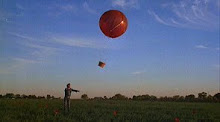
Werner Herzog. What a guy.
The cinema at BFI Southbank in London was full to the brim with Herzog fanboys and intellectuals alike, all waiting in awed expectation. Herzog briefly spoke before the screening of his new documentary, listing a couple of points about the film.
The documentary was set in the antarctic, in a desolate, alien land where the ice caps are king. In the interview with Mark Kermode, Herzog had stated that he only came across the idea when he saw producer Henry Kaiser's footage from his underwater work in the antarctic. The images were running on Kaisers laptop, and Herzog rushed over to ask him about them. The original stock formed the basis for Herzog's 'The Wild Blue Yonder', a science fiction docudrama. This led Herzog onto pursue this new project.
The film has much in common with both Herzog's previous fiction and documentary work. Firstly, the location is relatively cut away from the rest of the world and inhabits it's own bubble. Like the mountains in Aguirre or the rainforest in Fitzcarraldo, the setting is beautiful and takes on it's own character. Secondly, the inhabitants of the town are distinctly Herzog-ian. Dreamers, philosophers, travellers; all outsiders who have somehow reconvened in this distant corner of the earth. We meet a truck driver with his own New Age ideals, a pipefitter descended from Aztec royalty and a near mute penguin expert. Herzog finds both the humour and the sadness in these people. Trying to continue the conversation, Herzog asks the penguin expert if any of the penguins have shown gay or insane behaviour. The camera observes an absurd outdoor training exercise where buckets with painted faces on are put over the visitors heads in order for them to prepare for poor vision in bad conditions.
Herzog reiterated in his interview that he felt nature was indifferent to human beings, yet his film is full of beauty, poetry and humour. We marvel as we look over the abyss of a simmering volcano, and as we scale the luminous, otherworldly depths beneath the ice. It is frequently jaw dropping in its beauty. As far as transcendental possibly. There is one brilliant, silent moment where Herzog's gentle tones narrate a lost penguin. An extreme wide shot shows the penguin lose it's journeymen, and head off back to the mountains, which Herzog tells us are thousands of km's away. It is an absurd and poignant point in the film, showing the randomness of nature and it's inability to conform to human expectation.
The stories and rumours surrounding Herzog have been circulated to death, but Kermode's interview managed to steer well clear of cliches. Herzog was gracious and very eloquent. The interview began with three clips from his most famous works Aguirre, Fitzcarraldo and Grizzly Man. It was quite a striking image to see Herzog's silhouette standing legs astride in front of his most revered works, and his old friend Klaus Kinski. You get a different impression of Herzog to other filmmakers. While most stay comfortably in studio lots in Hollywood crafting their films, Herzog has trawled through jungles and across rivers, been imprisoned and harrassed. He is as worldly and fearless a filmmaker as you will find.
He was humorous and not afraid to appear like a seasoned intellectual, on being questioned about recent films that have inspired him, he answered that he didn't get to see very many, but said that he thought 'The Real Cancun' was 'delightful'. He called himself 'prudent' in the face of his accusations of recklessness. One of the main themes he talked about was climate change and the direction of the planet. Of course, much of what was said has been said before, but through Herzog's words the sentiments seemed more powerful.
Encounters at the end of the world- 8/10
Wednesday, 20 May 2009

Rachel Getting Married
With all the great films being released this January in the UK, it would be easy for a film like Rachel Getting Married to get lost in between. I caught this at the cinema with my brother and sister, which is apt considering it's a resolutely family film.
Rachel Getting Married is supposed to be director Jonathan Demme's return to his indie roots after a long spell in the mire of large Hollywood productions. I can hardly name any of his films off the top of my head to be honest, saving 'Silence of the lambs'. My brother laughed when I told him that was one of his earlier films. It's also a strong showcase for Anne Hathaway as a serious actress. And she performs admirably.
The plot revolves around Hathaway's recovering drug addict leaving rehab to go to her sister Rachel's wedding (hence the title). The family seems well to do and live in a large house in the suburbs. The contrast is set between the warm, comfy homelife and Kim's (Hathaway) turbulent existence. Her father and sister are caring and considerate, while Kim is self absorbed and acerbic. Conflict arises in Kim's need for attention jeopardising the harmony of her sisters special day. Although the sisters seem to share a special bond, we can see an underlying tension ready to erupt at any moment.
Hathaway excels as Kim. Her portrayal of a damaged and bitter person is convincing and uninhibited, condemning her yet leaving some room for hope. Demme often goes back to intimate, lingering close ups of Kim's face, examining her inner turmoil as the wedding guests go about their business happily. The father is played with camp exuberance, clapping excitedly, yet able to deliver the more serious material as well, and the sister also seems very human; a mixture of compassion and resentment felt for her wayward sister.
The characters and their problems all seemed wholly authentic, but Demme's camera also contributes greatly to the realism. Shot in shaky handheld camera and warm colours, the film feels less like a Hollywood product and more like one of your own home movies. So when the characters are arguing, or sharing a joyous moment, you feel the warmth on screen.
One other peculiar but welcome aspect of the film is the frequent musical performances. There's a worry that Demme might overstep the mark and over saturate the film with the music, but for me it worked really well. At the rehearsal a young drums and guitar duo play a fuzzy rendition of the wedding theme. Elsewhere, there is folk music, reggae, dance and even Robyn Hitchcock makes an appearance. To assert it's musical credibility even further, TV on the Radio's Tunde Adebimpe stars as Rachel's fiancee. Now, I can't honestly say any Oscars are heading his way any time soon, but his performance is made worthwhile by a sparkling vocal solo for his soon to be wife.
8/10
Rachel Getting Married is supposed to be director Jonathan Demme's return to his indie roots after a long spell in the mire of large Hollywood productions. I can hardly name any of his films off the top of my head to be honest, saving 'Silence of the lambs'. My brother laughed when I told him that was one of his earlier films. It's also a strong showcase for Anne Hathaway as a serious actress. And she performs admirably.
The plot revolves around Hathaway's recovering drug addict leaving rehab to go to her sister Rachel's wedding (hence the title). The family seems well to do and live in a large house in the suburbs. The contrast is set between the warm, comfy homelife and Kim's (Hathaway) turbulent existence. Her father and sister are caring and considerate, while Kim is self absorbed and acerbic. Conflict arises in Kim's need for attention jeopardising the harmony of her sisters special day. Although the sisters seem to share a special bond, we can see an underlying tension ready to erupt at any moment.
Hathaway excels as Kim. Her portrayal of a damaged and bitter person is convincing and uninhibited, condemning her yet leaving some room for hope. Demme often goes back to intimate, lingering close ups of Kim's face, examining her inner turmoil as the wedding guests go about their business happily. The father is played with camp exuberance, clapping excitedly, yet able to deliver the more serious material as well, and the sister also seems very human; a mixture of compassion and resentment felt for her wayward sister.
The characters and their problems all seemed wholly authentic, but Demme's camera also contributes greatly to the realism. Shot in shaky handheld camera and warm colours, the film feels less like a Hollywood product and more like one of your own home movies. So when the characters are arguing, or sharing a joyous moment, you feel the warmth on screen.
One other peculiar but welcome aspect of the film is the frequent musical performances. There's a worry that Demme might overstep the mark and over saturate the film with the music, but for me it worked really well. At the rehearsal a young drums and guitar duo play a fuzzy rendition of the wedding theme. Elsewhere, there is folk music, reggae, dance and even Robyn Hitchcock makes an appearance. To assert it's musical credibility even further, TV on the Radio's Tunde Adebimpe stars as Rachel's fiancee. Now, I can't honestly say any Oscars are heading his way any time soon, but his performance is made worthwhile by a sparkling vocal solo for his soon to be wife.
8/10
L'Homme du train
Patrice Leconte's 2003 film starring Johnny Halliday and Jean Rochefort.
I picked this film out after enjoying 'The hairdresser's husband' and 'The girl on the bridge', by the same director. 'The man on the train' features the same style as these two previous films, and even seems to reference them at some points.
The film begins mysteriously with a rugged, silent man (Halliday) stepping off a train and arriving in a small provincial French town. The man goes to buy some aspirin at the local pharmacy, where Rochefort's character is also visiting. When the pharmacy doesn't have the aspirin, Rochefort offers to give him some back at his house. It is a chance meeting, of two wildly different characters intercutting each others lives; parallels could be drawn with Rochefort's entrance into the salon in 'The Hairdresser's Husband'. While Halliday is cool and weary, Rochefort, with his droopy features and excitable demeanour, is the exact opposite. The only things they have in common are their autumn age and their location.
Rocheforts house is old and grand; he gives Halliday a tour of his family paintings and antiques with great pride. It is obvious that Rochefort is at home here and engrained in a routine of leisurely provincial life. Leconte then tells us that Halliday is a gangster, and less impressively, Rochefort a teacher. The gap between the two seems great, but this only sets the scene for the transformation of the two characters.
Rochefort begins to learn the ways of the gangster, shooting a gun, while Halliday slowly appreciates the stately way of life, like a good pair of slippers or a book. Rochefort wants more excitement and danger in his life, while Halliday is looking for the opposite, something more eternal. Leconte shows restraint and measurement in the unfolding of the relationship. There's no sensationalism or crude sentimentality in the friendship between the two men.
The images are saturated sometimes to compliment the surroundings or situations, like a blue tint for the meetings with the gangsters. The score by Pascal Esteve is playful and adds guitar to the usual mix of strings. The film is generally confident and unshowy, smooth camera movements and lingering two shots.
Overall, I would recommend any of Leconte's work. This film didn't quite hit the heights of the previous two I mentioned. The relationship between these two weathered men is witty and well observed, yet doesn't quite have the sparkle of the romances in his earlier pieces.
I picked this film out after enjoying 'The hairdresser's husband' and 'The girl on the bridge', by the same director. 'The man on the train' features the same style as these two previous films, and even seems to reference them at some points.
The film begins mysteriously with a rugged, silent man (Halliday) stepping off a train and arriving in a small provincial French town. The man goes to buy some aspirin at the local pharmacy, where Rochefort's character is also visiting. When the pharmacy doesn't have the aspirin, Rochefort offers to give him some back at his house. It is a chance meeting, of two wildly different characters intercutting each others lives; parallels could be drawn with Rochefort's entrance into the salon in 'The Hairdresser's Husband'. While Halliday is cool and weary, Rochefort, with his droopy features and excitable demeanour, is the exact opposite. The only things they have in common are their autumn age and their location.
Rocheforts house is old and grand; he gives Halliday a tour of his family paintings and antiques with great pride. It is obvious that Rochefort is at home here and engrained in a routine of leisurely provincial life. Leconte then tells us that Halliday is a gangster, and less impressively, Rochefort a teacher. The gap between the two seems great, but this only sets the scene for the transformation of the two characters.
Rochefort begins to learn the ways of the gangster, shooting a gun, while Halliday slowly appreciates the stately way of life, like a good pair of slippers or a book. Rochefort wants more excitement and danger in his life, while Halliday is looking for the opposite, something more eternal. Leconte shows restraint and measurement in the unfolding of the relationship. There's no sensationalism or crude sentimentality in the friendship between the two men.
The images are saturated sometimes to compliment the surroundings or situations, like a blue tint for the meetings with the gangsters. The score by Pascal Esteve is playful and adds guitar to the usual mix of strings. The film is generally confident and unshowy, smooth camera movements and lingering two shots.
Overall, I would recommend any of Leconte's work. This film didn't quite hit the heights of the previous two I mentioned. The relationship between these two weathered men is witty and well observed, yet doesn't quite have the sparkle of the romances in his earlier pieces.
Slumdog Millionaire
I only watched this in the cinema a few hours ago, so hopefully it'll be fresh in the memory.
It was an absolute joy to watch. You could sense the whole audience's involvement in the film. At one point I heard a woman to the right of me volunteer and "Oh no!". It sweeps you up and never lets go.
Danny Boyle's film follows the ascent of a 'slumdog' from Mumbai named Jamal. The film is punctuated by conversations between a policeman and Jamal, who is questioning him about his inexplicable success on the Indian 'Who wants to be a millionaire?', akin to the structure in The Usual Suspects. The other two big characters in the film are Salim, his brother, and Latika, his perennial love interest.
The film begins in Mumbai amid the shacked houses and dirty streets. The cinematography is particularly superb in these early sequences. The energy and verve of the slums is captured by frenetic chases across the rooftops and concrete plains, in a loose documentary style reminiscent of City of God. Boyle conjures up a sense of the roughness of life in the slums but also the vibrancy. The complicated relationship between the two brothers is also established, alternating between camararderie and deception.
The attack on the muslims of the slum is brutal and unexpectant, but Boyle manages not to sentimentalise the aftermath. It already has a power of its own, the sight of three orphaned sheltering from the rain. The whole film is almost an updating of Dickens to contemporary India. Jamal is forced through a series of hardships, but all help him on his way in the end. Each flashback shows how he came to know the questions that will transform his life.
The different incantations all turn in fine naturalistic performances as Jamal, Salim and Lakita. The earliest incantations especially carry a zest for life and an infectious humour. The 'baddies' that they encounter on the way could be seen as slightly one dimensional, but it's not to hard to imagine a dog-eat-dog world like Mumbai having its fare share of criminals who desire a better life with whatever means possible.
As I say, I really, really enjoyed this film. It adds another feather to Boyle's illustrious bow. It takes a lot of courage to step into a completely different world form the one you inhabit and present a convincing portrayal of that world. Sure, some aspects of the film require a suspension of disbelief, but if you go along with it then it's a rewarding, enlightening delight.
8/10
It was an absolute joy to watch. You could sense the whole audience's involvement in the film. At one point I heard a woman to the right of me volunteer and "Oh no!". It sweeps you up and never lets go.
Danny Boyle's film follows the ascent of a 'slumdog' from Mumbai named Jamal. The film is punctuated by conversations between a policeman and Jamal, who is questioning him about his inexplicable success on the Indian 'Who wants to be a millionaire?', akin to the structure in The Usual Suspects. The other two big characters in the film are Salim, his brother, and Latika, his perennial love interest.
The film begins in Mumbai amid the shacked houses and dirty streets. The cinematography is particularly superb in these early sequences. The energy and verve of the slums is captured by frenetic chases across the rooftops and concrete plains, in a loose documentary style reminiscent of City of God. Boyle conjures up a sense of the roughness of life in the slums but also the vibrancy. The complicated relationship between the two brothers is also established, alternating between camararderie and deception.
The attack on the muslims of the slum is brutal and unexpectant, but Boyle manages not to sentimentalise the aftermath. It already has a power of its own, the sight of three orphaned sheltering from the rain. The whole film is almost an updating of Dickens to contemporary India. Jamal is forced through a series of hardships, but all help him on his way in the end. Each flashback shows how he came to know the questions that will transform his life.
The different incantations all turn in fine naturalistic performances as Jamal, Salim and Lakita. The earliest incantations especially carry a zest for life and an infectious humour. The 'baddies' that they encounter on the way could be seen as slightly one dimensional, but it's not to hard to imagine a dog-eat-dog world like Mumbai having its fare share of criminals who desire a better life with whatever means possible.
As I say, I really, really enjoyed this film. It adds another feather to Boyle's illustrious bow. It takes a lot of courage to step into a completely different world form the one you inhabit and present a convincing portrayal of that world. Sure, some aspects of the film require a suspension of disbelief, but if you go along with it then it's a rewarding, enlightening delight.
8/10
Witchfinder General
Funnily enough I was actually hoping to watch 'Festen', when I opened the DVD case from the library it instead had the 'Witchfinder General' disc. Luckily WG is a film that I was looking to watch at some point, and should be glad it wasn't Bad Boys 2. That would have been irritating.
Witchfinder General is a 1968 psychological horror directed by Michael Reeves. I'm not totally confident, but I think it may have been part of the Hammer Horror series popular in the UK in this period. It certainly has links to the series anyway, as Vincent Price stars as Matthew Hopkins. The film is quite an oddity; a strange mix of serious historical drama and somewhat schlocky B-movie horror. If I was to draw comparisons between any other films, I would say Robin Hardy's 'The Wicker Man', released a few years later comes to mind. It has the same themes of religious fanaticism and horror, and similarly worked with a low budget. Of course, 'The Wicker Man' is obviously a much finer film and is pretty much flawless. WG stands up pretty well as a psychological horror today, though it does betray it's low budget limitations in a few minor gaffes, and the quality of the image is sometimes tarnished.
The story focuses on Hopkins and his chief torturer's campaign against a priest and his young nephew, who are accused of idolatory and conspiring with the devil. In one of the early scenes, a gathering of villagers tell of unholy garments and candles used by the priest. The priest is dunked in his castle moat, in which he swims, leading him to be hanged as a witch. His nephew allows herself to be seduced by Hopkins in order to stop her uncle's death, but to no avail. Reeves' film does well to emphasise Hopkin's pursuit of sex, power and money.
The dramatic conflict comes in the form of Anthony Hopkins (in an early role) playing a heroic Roundhead soldier. Betrothed to the priest's nephew, he engages in bloodthirsty pursuit of Hopkins and his henchman. The film has well choreographed fights, and a number of breathless horseback chases. The film presents quite a simplistic portrayal of the evil Hopkins and the noble Roundhead.
On the one hand the film is coherent and exciting, the burnings and hangings horrific. Vincent Price is surprisingly subtle in his portrayal of Hopkins, and the film is nicely shot in the rural (Norfolk?) countryside, with echoes of Constable's paintings. On the other hand, it only goes surface deep in its examinations of Matthew Hopkins and the phenomenon of witch hunting in that period. There are only little snippets of social and political hysteria in the film, leaving the viewer wanting. On viewing this film it struck me that a really strong piece of work could be made from the Matthew Hopkins saga. Reeves' work is an effective piece of entertainment horror, yet there is still opportunity of a serious examination of this period in history.
7/10
Witchfinder General is a 1968 psychological horror directed by Michael Reeves. I'm not totally confident, but I think it may have been part of the Hammer Horror series popular in the UK in this period. It certainly has links to the series anyway, as Vincent Price stars as Matthew Hopkins. The film is quite an oddity; a strange mix of serious historical drama and somewhat schlocky B-movie horror. If I was to draw comparisons between any other films, I would say Robin Hardy's 'The Wicker Man', released a few years later comes to mind. It has the same themes of religious fanaticism and horror, and similarly worked with a low budget. Of course, 'The Wicker Man' is obviously a much finer film and is pretty much flawless. WG stands up pretty well as a psychological horror today, though it does betray it's low budget limitations in a few minor gaffes, and the quality of the image is sometimes tarnished.
The story focuses on Hopkins and his chief torturer's campaign against a priest and his young nephew, who are accused of idolatory and conspiring with the devil. In one of the early scenes, a gathering of villagers tell of unholy garments and candles used by the priest. The priest is dunked in his castle moat, in which he swims, leading him to be hanged as a witch. His nephew allows herself to be seduced by Hopkins in order to stop her uncle's death, but to no avail. Reeves' film does well to emphasise Hopkin's pursuit of sex, power and money.
The dramatic conflict comes in the form of Anthony Hopkins (in an early role) playing a heroic Roundhead soldier. Betrothed to the priest's nephew, he engages in bloodthirsty pursuit of Hopkins and his henchman. The film has well choreographed fights, and a number of breathless horseback chases. The film presents quite a simplistic portrayal of the evil Hopkins and the noble Roundhead.
On the one hand the film is coherent and exciting, the burnings and hangings horrific. Vincent Price is surprisingly subtle in his portrayal of Hopkins, and the film is nicely shot in the rural (Norfolk?) countryside, with echoes of Constable's paintings. On the other hand, it only goes surface deep in its examinations of Matthew Hopkins and the phenomenon of witch hunting in that period. There are only little snippets of social and political hysteria in the film, leaving the viewer wanting. On viewing this film it struck me that a really strong piece of work could be made from the Matthew Hopkins saga. Reeves' work is an effective piece of entertainment horror, yet there is still opportunity of a serious examination of this period in history.
7/10
Chungking Express
Chungking Express is Wong Kar Wai's 1994 film set in Hong Kong and revolving around the fates of two couples. The film is split into two parts, the first involving a female con artist and a male policeman, and the second a female cafe worker and another male cop. Apparently the film was only made in 23 days and it was split into two for faster editing purposes. It doesn't diminish the quality of the film- it has an effortless flow to it, and the audience can examine the parallels between them.
The four main characters are all lost, and in the case of the two male policemen, aching for their former girlfriends. In the first part the glamorous but dangerous con artist plays a sort of femme fatale figure, apathetic to the cop's advances. In the second, the girl secretly longs after the cop who frequents the cafe, and ends up trespassing into his his flat. Both cops naively wait for their ex's to come back; Kaneshiro's character goes running to ease the pain and eats her favourite fruit, while Leung talks to household items like soap for comfort.
It is an incredibly sweet and romantic film; after watching In the mood for love I was frustrated by what I deemed the restraint, and perhaps even the coldness in the characters relationship. Chungking Express hinges on the same secret longing, but has a warmth and openness to it that elevates it past ITMFL. Kar Wai's film is filled with charming character nuances, like Kaneshiro's insistence that he eat canned pineapple dated May 1st, in tribute to his love for his ex, while the cafe girl loves to play music loudly "so you don't have to think", particularly the Mama's and the Papa's 'California Dreamin".
It is also an absolute feast for the senses. Kar Wai's longtime cinematographer Doyle is noted for his superb colour pallete and invigorating cinematography. In the case of this film, the Hong Kong streets are a blur of colours and sounds. The serene colours echo the characters joy and sadness. Even the most menial everyday tasks, such as cleaning kitchen surfaces, are turned into exhilarating cinematic sequences through the eyes of Doyle's handheld camera. The music is also very evocative, 'California Dreamin', one of my favourite tracks from childhood, was a welcome surprise, as was Wong's covers of Cocteau Twin and Cranberries tracks. The lushness of the visuals are perfectly complimented by the woozy songs.
Surprisingly warm, energetic and charming. 8/10.
The four main characters are all lost, and in the case of the two male policemen, aching for their former girlfriends. In the first part the glamorous but dangerous con artist plays a sort of femme fatale figure, apathetic to the cop's advances. In the second, the girl secretly longs after the cop who frequents the cafe, and ends up trespassing into his his flat. Both cops naively wait for their ex's to come back; Kaneshiro's character goes running to ease the pain and eats her favourite fruit, while Leung talks to household items like soap for comfort.
It is an incredibly sweet and romantic film; after watching In the mood for love I was frustrated by what I deemed the restraint, and perhaps even the coldness in the characters relationship. Chungking Express hinges on the same secret longing, but has a warmth and openness to it that elevates it past ITMFL. Kar Wai's film is filled with charming character nuances, like Kaneshiro's insistence that he eat canned pineapple dated May 1st, in tribute to his love for his ex, while the cafe girl loves to play music loudly "so you don't have to think", particularly the Mama's and the Papa's 'California Dreamin".
It is also an absolute feast for the senses. Kar Wai's longtime cinematographer Doyle is noted for his superb colour pallete and invigorating cinematography. In the case of this film, the Hong Kong streets are a blur of colours and sounds. The serene colours echo the characters joy and sadness. Even the most menial everyday tasks, such as cleaning kitchen surfaces, are turned into exhilarating cinematic sequences through the eyes of Doyle's handheld camera. The music is also very evocative, 'California Dreamin', one of my favourite tracks from childhood, was a welcome surprise, as was Wong's covers of Cocteau Twin and Cranberries tracks. The lushness of the visuals are perfectly complimented by the woozy songs.
Surprisingly warm, energetic and charming. 8/10.
Inland Empire
This is my first entry in what will hopefully be a catalogue of films.
Inland Empire is a film that cannot be analysed in the same way as your average film. It is most definitely 'art cinema'- non linear narrative, characters acting inconsistently from scene to scene and abstract meaning. It's all there. The film stars Laura Dern, who seems to be something of a muse to Lynch and co-produced the film. She plays an actress who takes the lead role in a film based on a Polish wives tale. The thing is, I can't actually say that last sentence was true. In Inland Empire, nothing is certain. Dern's character seems to be playing numerous reflections of herself in multiple realities, which makes it basically impossible for the audience to derive a coherent plot to follow. We don't know if we're seeing a film within a film, or a dream within a film, or a film within a dream. It is completely open to interpretation.
At the beginning, an elderly Polish woman arrives at Dern's house, and warns her of the curse on her film. It is one of the most eerie sequences in the film. The camera is uncomfortably close to the woman's boggling eyes and thin, predatorial smile. It is very reminiscent of Nic Roeg's films, where the claustrophobia is conjured by extreme close ups, tilted angles and unhinged orchestral music.
The film was shot digitally, and the film has a grainy look to it which contributes to the feelings of uncertainty. The camera also allows Lynch an adventurous, roaming style adding to the edginess. Although the shots aren't as composed as say Mulholland Drive, there are some genuinely striking visuals and moody colours. It's grungy, freeform feel is a departure for Lynch but it works for the most part.
Most of the characters are typically Lynchian in their oddness. Swaying uncomfortably between deranged amusement and feverish seriousness, there is never a let up of the intensity of the characters we encounter. Dern is quite excellent, giving a committed and uninhibited performance in a difficult role. Much of the scenes were supposedly written just before they were shot, so Dern shows a remarkable ability to adapt to the chaotic nature of the production and the characters.
I have no idea what is going on in this film, and for that matter, Lynch's quiffed head. For me, it veered between morbid fascination, horror, boredom and confusion. I must confess I struggled through the film in 3 parts- the length of the film coupled with it's tangled narrative and mercurial characters meant I floundered somewhat. I feel that a more concise running time would have packed a more powerful punch. What I'm left with is a film with a handful of images that will resonate uncomfortably in the burrows of my mind.
Inland Empire is a film that cannot be analysed in the same way as your average film. It is most definitely 'art cinema'- non linear narrative, characters acting inconsistently from scene to scene and abstract meaning. It's all there. The film stars Laura Dern, who seems to be something of a muse to Lynch and co-produced the film. She plays an actress who takes the lead role in a film based on a Polish wives tale. The thing is, I can't actually say that last sentence was true. In Inland Empire, nothing is certain. Dern's character seems to be playing numerous reflections of herself in multiple realities, which makes it basically impossible for the audience to derive a coherent plot to follow. We don't know if we're seeing a film within a film, or a dream within a film, or a film within a dream. It is completely open to interpretation.
At the beginning, an elderly Polish woman arrives at Dern's house, and warns her of the curse on her film. It is one of the most eerie sequences in the film. The camera is uncomfortably close to the woman's boggling eyes and thin, predatorial smile. It is very reminiscent of Nic Roeg's films, where the claustrophobia is conjured by extreme close ups, tilted angles and unhinged orchestral music.
The film was shot digitally, and the film has a grainy look to it which contributes to the feelings of uncertainty. The camera also allows Lynch an adventurous, roaming style adding to the edginess. Although the shots aren't as composed as say Mulholland Drive, there are some genuinely striking visuals and moody colours. It's grungy, freeform feel is a departure for Lynch but it works for the most part.
Most of the characters are typically Lynchian in their oddness. Swaying uncomfortably between deranged amusement and feverish seriousness, there is never a let up of the intensity of the characters we encounter. Dern is quite excellent, giving a committed and uninhibited performance in a difficult role. Much of the scenes were supposedly written just before they were shot, so Dern shows a remarkable ability to adapt to the chaotic nature of the production and the characters.
I have no idea what is going on in this film, and for that matter, Lynch's quiffed head. For me, it veered between morbid fascination, horror, boredom and confusion. I must confess I struggled through the film in 3 parts- the length of the film coupled with it's tangled narrative and mercurial characters meant I floundered somewhat. I feel that a more concise running time would have packed a more powerful punch. What I'm left with is a film with a handful of images that will resonate uncomfortably in the burrows of my mind.
Subscribe to:
Posts (Atom)