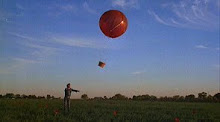
I'm just about to embark on a review of one of cinema's most revered films. Don't shoot me.
Sergei Parajanov occupies a strange place in public perception; lauded to the high heavens by critics and cinephiles as one of the greatest filmmakers of all time, yet seemingly unknown to 99% of the population. Perhaps it is his Armenian background, not exactly a hotbed of household figures. Or maybe it's because of the censorship and imprisonment that hindered his career? Fortunately Parajanov seems to be gaining some more exposure in recent years; there has been an upswell in interest in lost filmic gems, signaled by Scorsese's film restorations.
Parajanov certainly deserves his reputation, despite any qualms I might have with some of his work. His films have a visual style almost completely unique to any other; how many filmmakers could you say that about? The Colour of Pomegranates is his most praised and famous film. It is an unconventional biopic of the Armenian poet Sayat Nova. Instead of telling a linear story of Nova's life, trodding through his ups and downs, Parajanov uses an elliptic editing style, making use of static tableaux shots and poetic flights of fancy.
In fact, you would be hard pressed to find a distinctive story to grasp onto. We begin seeing through a child's point of view, flashes of colour in a rustic town. It is reminiscent of Tarkovsky's Mirror and the recent The Tree of Life, dwelling on moments of beauty and revelling in Nova's childlike wonder. Parajanov has little interest in telling a classical story, but creating a piece of work that reflects Nova's own poetry.
Nova ends his life in a monastery, but this is not particularly important. There is little dialogue, and the acting is fairly muted. Having seen a few of Parajanov's films now, I would say that the performances are less about expressing themselves as human beings, more vessels for Parajanov's overall vision. Parajanov was influenced by "Armenian illuminated miniatures", which explains why each frame feels more like a intricate painting than a cinematic image. Costumes and mise en scene are lovingly handcrafted by Parajanov, creating some of the most beautiful frames in cinema.
I have to confess, although Pomegranates is visually stunning, I prefer the swashbuckling, roaming cinematography of Shadow of Forgotten Ancestors, an earlier film. The Kalatozov style camera work coupled with the mise en scene in that film created some extraordinary sequences.
Tuesday, 8 November 2011

Sleeping Sickness, LFF 2011
There are some films/filmmakers who revel in their weirdness. Audiences going into watch the new David Lynch readily expect an explosion of surrealism. A sinister midget? Cross country lawnmowers? Oh David, you do spoil us. But then again, there are those peculiar films which lull you into a false sense of security, then BAM! A hippopotamus walks on screen. Yes, you heard me.
Which leads me into Sleeping Sickness, upcoming German director Ulrich Kohler's Cameroonian set film. The film starts off fairly dryly, with our introduction to doctor Ebbo Velten (Pierre Bokma), who is working in a remote hospital dealing with 'sleeping sickness'. Sleeping sickness manifests itself with bouts of insomnia and fatigue, causing the sufferer severe disorientation. The film structurally tries to reflect this condition, in its elliptic editing and humid visuals.
Velten and his family are about to return back to Germany, after a long stint in Africa, and one critic has described the film as a representation of the displacement felt by moving between the continents. Personally, I felt it difficult to assign a particular message or theme to the film, such is its surreal, subtle allure. Halfway through the film, without warning, the focus shifts onto a young French-Congolese doctor named Nzila (Jean- Christophe Folly), who is embarking on a similar mission to Velten. He meets Velten there, and sees that the white doctor has become a shell of his former self.
I mentioned David Lynch earlier, and there are some parallels to be drawn with the disorientating structure and fluid, interchanging characters. Yet Sleeping Sickness is perhaps more unsettling because it often feels like a conventional observational drama akin to Claire Denis, then sidesteps you with a moment of absurdism. I can't say I thought Sleeping Sickness was a great film, because it was slightly unsatisfying in its elusiveness. But this is also why it stays with you after the credits roll.
Which leads me into Sleeping Sickness, upcoming German director Ulrich Kohler's Cameroonian set film. The film starts off fairly dryly, with our introduction to doctor Ebbo Velten (Pierre Bokma), who is working in a remote hospital dealing with 'sleeping sickness'. Sleeping sickness manifests itself with bouts of insomnia and fatigue, causing the sufferer severe disorientation. The film structurally tries to reflect this condition, in its elliptic editing and humid visuals.
Velten and his family are about to return back to Germany, after a long stint in Africa, and one critic has described the film as a representation of the displacement felt by moving between the continents. Personally, I felt it difficult to assign a particular message or theme to the film, such is its surreal, subtle allure. Halfway through the film, without warning, the focus shifts onto a young French-Congolese doctor named Nzila (Jean- Christophe Folly), who is embarking on a similar mission to Velten. He meets Velten there, and sees that the white doctor has become a shell of his former self.
I mentioned David Lynch earlier, and there are some parallels to be drawn with the disorientating structure and fluid, interchanging characters. Yet Sleeping Sickness is perhaps more unsettling because it often feels like a conventional observational drama akin to Claire Denis, then sidesteps you with a moment of absurdism. I can't say I thought Sleeping Sickness was a great film, because it was slightly unsatisfying in its elusiveness. But this is also why it stays with you after the credits roll.
Elena, LFF 2011
Elena is the third feature film by Russian director Andrei Zvyagintsev. He came to prominence with his startling debut The Return, an enigmatic, visually striking film about a family road trip. His reputation was sealed with an assured sophomore effort entitled The Banishment (you can see he has a penchant for mysterious titles) and whispers of an heir to Tarkovsky were heard. So Elena comes with a hefty set of expectations attached.
This parable-like tale concerns Elena (Nadezhda Markina), a steely housewife, caught between her rich husband Vladimir (Andrey Smirnov) and layabout son Sergey (Aleksey Rozin). Elena used to care for Vladimir, but has now been married to him for 10 years. The couple live in a luxurious city apartment, while Sergey and his family live in poverty in a small deadbeat town. The director effectively juxtaposes these two opposing existences, perhaps making a point about the gap between the wealthy and the poor in modern day Russia.
Sergey urges his mother to ween money from Vladimir, his stepfather, in order to pay for his obnoxious son to go to uni. Vladimir, a grumpy, stingy man, balks at Sergey's laziness and refuses to cave in to the demands, not even to sate his wife. Elena is caught between two stubborn men, and when Vladimir starts to fall ill, she faces a dilemma about whose side she is going to take. Added into the mix is Vladimir's estranged, hedonistic daughter Katerina (a sharp-eyed Yelena Lyadova).
The performances are routinely impressive, Markina especially working with a difficult, nuanced portrayal of loyalty and guilt. The film as a whole feels very enigmatic, very unshowy. At various points there are references to religion, and morality seems to be the major theme of the film. Aesthetically and thematically I would say this this is weaker than Zvyagintsev's previous two films; the bleached out, expressive landscapes have been replaced with a more banal urban look. Despite this, the film is very accomplished, and compelling, the understated moralistic dilemmas leaving it a quiet power.
This parable-like tale concerns Elena (Nadezhda Markina), a steely housewife, caught between her rich husband Vladimir (Andrey Smirnov) and layabout son Sergey (Aleksey Rozin). Elena used to care for Vladimir, but has now been married to him for 10 years. The couple live in a luxurious city apartment, while Sergey and his family live in poverty in a small deadbeat town. The director effectively juxtaposes these two opposing existences, perhaps making a point about the gap between the wealthy and the poor in modern day Russia.
Sergey urges his mother to ween money from Vladimir, his stepfather, in order to pay for his obnoxious son to go to uni. Vladimir, a grumpy, stingy man, balks at Sergey's laziness and refuses to cave in to the demands, not even to sate his wife. Elena is caught between two stubborn men, and when Vladimir starts to fall ill, she faces a dilemma about whose side she is going to take. Added into the mix is Vladimir's estranged, hedonistic daughter Katerina (a sharp-eyed Yelena Lyadova).
The performances are routinely impressive, Markina especially working with a difficult, nuanced portrayal of loyalty and guilt. The film as a whole feels very enigmatic, very unshowy. At various points there are references to religion, and morality seems to be the major theme of the film. Aesthetically and thematically I would say this this is weaker than Zvyagintsev's previous two films; the bleached out, expressive landscapes have been replaced with a more banal urban look. Despite this, the film is very accomplished, and compelling, the understated moralistic dilemmas leaving it a quiet power.
Tuesday, 1 November 2011
Into the abyss, BFI London FIlm Festival 2011
Interest in death row is nothing new. I would wager that most people would confess a morbid interest in the inmates and crimes. Only recently documentarian Louis Theroux visited various different high security prisons in America. So what can Werner Herzog bring to the table?
Herzog brings experience. We never see him, just hear his voice as he interviews his subjects. He talks to people with compassion, rarely straying into prejudice. He asks penetrating questions, and receives honest, emotionally open answers. People trust in him, more than a charming, bespectacled English reporter.
The film essentially comprises of a series of a number of interviews, mostly static talking heads, interspersed with original footage of the chilling crime scene tapes. Instead of collecting a wide array of interviews from various inmates, Herzog focuses on one subject named Michael Perry, and the people surrounding the crime.
In the film, Perry is due to be executed in 8 days, for the murder of 3 people, over a sports car that he and his accomplices desired. When we first see him, filmed through a pane of protective glass, it is hard to equate him with a merciless killer. He is smiley and goofy, and could pass for a 17 year old. He seems oddly bouncy, somewhat in denial of his impending fate. It is fairly tragic, his futile hope for some kind of miracle. We as an audience realise that we are by now watching someone who has already passed on.
We meet the relatives of the victims. Both siblings of the deceased, and irreparably scarred by their losses, and the nature of the deaths. Both of their lives (they are from different families) are racked with tragedy. Suicides, illnesses, convictions are rife in their bloodlines. We begin to get a picture of the kind of lives that people live with in this corner of the world. Tragedy seems to be carved into the landscape.
Jason Burkett, Perry's accomplice, is serving a life sentence, and has married a death row 'groupie'. A rare moment of (dark) humour in the film, his partner describes how she fell in love while working on his case. In one of the most heartbreaking/disturbing revelations of the film, we learn that Burkett's father is serving 40 years in a jail directly opposite Jason's. The father racked, with grief and regret, describes having Thanksgiving dinner with his two sons (the other is also incarcerated in a local prison), and contemplating his failures. What is really striking is the cycle of violence and misdemeanour that seems to riddle the families. It would seem like this is a common occurrence.
The film works well because Herzog lets the stories tell themselves, lets the subjects unload their emotional baggage. It is an intense, emotional piece of work. Herzog is a stern but fair interviewer, never manipulated by his subjects nor condemning them too harshly. An incredible film.
Herzog brings experience. We never see him, just hear his voice as he interviews his subjects. He talks to people with compassion, rarely straying into prejudice. He asks penetrating questions, and receives honest, emotionally open answers. People trust in him, more than a charming, bespectacled English reporter.
The film essentially comprises of a series of a number of interviews, mostly static talking heads, interspersed with original footage of the chilling crime scene tapes. Instead of collecting a wide array of interviews from various inmates, Herzog focuses on one subject named Michael Perry, and the people surrounding the crime.
In the film, Perry is due to be executed in 8 days, for the murder of 3 people, over a sports car that he and his accomplices desired. When we first see him, filmed through a pane of protective glass, it is hard to equate him with a merciless killer. He is smiley and goofy, and could pass for a 17 year old. He seems oddly bouncy, somewhat in denial of his impending fate. It is fairly tragic, his futile hope for some kind of miracle. We as an audience realise that we are by now watching someone who has already passed on.
We meet the relatives of the victims. Both siblings of the deceased, and irreparably scarred by their losses, and the nature of the deaths. Both of their lives (they are from different families) are racked with tragedy. Suicides, illnesses, convictions are rife in their bloodlines. We begin to get a picture of the kind of lives that people live with in this corner of the world. Tragedy seems to be carved into the landscape.
Jason Burkett, Perry's accomplice, is serving a life sentence, and has married a death row 'groupie'. A rare moment of (dark) humour in the film, his partner describes how she fell in love while working on his case. In one of the most heartbreaking/disturbing revelations of the film, we learn that Burkett's father is serving 40 years in a jail directly opposite Jason's. The father racked, with grief and regret, describes having Thanksgiving dinner with his two sons (the other is also incarcerated in a local prison), and contemplating his failures. What is really striking is the cycle of violence and misdemeanour that seems to riddle the families. It would seem like this is a common occurrence.
The film works well because Herzog lets the stories tell themselves, lets the subjects unload their emotional baggage. It is an intense, emotional piece of work. Herzog is a stern but fair interviewer, never manipulated by his subjects nor condemning them too harshly. An incredible film.
Last Winter, BFI London Film Festival 2011
I'm in two minds about Last Winter, the debut feature of John Shank. On one hand, you've got an accomplished, serious, occasionally visually striking drama about a young farmer coming to terms with the loss of his industry/world. One the other hand, it feels like a film that's predictable from start to finish, from every single character to every plot movement. There is nothing new here.
We are introduced to johann, who is toiling alone on the farm that he inherited from his dead father. It is based in small village in central France, a stark, blustery landscape, bringing to mind some of Bruno Dumont's film terrains. He is evidently dedicated to his work and revels in the environment. Shank shows him milling in idyllic rivers and tending to sun-glazed animals. He is supported by a local girlfriend, who waits each night for him to climb into bed. All rosy so far.
The edenic existence is shattered, however, by the realisation that the farming co-op that Johann is part of, is suffering. As the head of the co-op, it's Johann's ultimate decision whether to give in to Helier, the middle man between the co-op and the larger foreign companies who want to dictate the farmers work. Johann, ever stubborn, is reluctant to adapt to modern demands.
Coming from a rural background, these issues are not unfamiliar to me, and there are many news reports about farms capitulating under bankruptcy, and even suicides. This is clearly a serious issue and one that I have not seen represented on screen much, if at all. Yet, it might be this familiarity that with the subject that makes the film slightly staid for me.
Perhaps it is because the director Shank, American born, was not already engrained in the culture that he is depicting; does his outsider status perhaps make the film feel a little inauthentic? Altogether the film feels somewhat by the numbers. His girlfriend is of little or no consequence, barely saying a few words across the film. There is the inexplicable presence of his mentally disturbed sibling, a strange staple of independent dramas ('What's eating Gilbert Grape?', a small Hungarian drama named 'Lost Times'), who's only role seems to be to inject unnecessary angst to the story and bludgeon home how compassionate the protagonist is.
There are elements of Malick in the idyllic shots of nature and landscape, but these are mostly drowned out by the gloomy middle section. There is a particular sequence which seems indebted to Days of Heaven's famous locust spectacle. Bruno Dumont appears to be another reference point, with his stark portrayals of rural French life. Last Winter unfortunately feels like a lite version of these auteurs films, neither beautiful or otherworldly enough for Malick, or gritty and compelling enough to be a Dumont.
By the end I was pleading for Shank to refrain from an 'open ending'. Once a thoughtful, challenging part of many tremendous films, it now seems to be a weapon for lazy filmmakers unsure of how to end their story. Often there might not be a 'right' ending, but I think Last Winter had the choice of two interesting paths. It chose the middle road.
We are introduced to johann, who is toiling alone on the farm that he inherited from his dead father. It is based in small village in central France, a stark, blustery landscape, bringing to mind some of Bruno Dumont's film terrains. He is evidently dedicated to his work and revels in the environment. Shank shows him milling in idyllic rivers and tending to sun-glazed animals. He is supported by a local girlfriend, who waits each night for him to climb into bed. All rosy so far.
The edenic existence is shattered, however, by the realisation that the farming co-op that Johann is part of, is suffering. As the head of the co-op, it's Johann's ultimate decision whether to give in to Helier, the middle man between the co-op and the larger foreign companies who want to dictate the farmers work. Johann, ever stubborn, is reluctant to adapt to modern demands.
Coming from a rural background, these issues are not unfamiliar to me, and there are many news reports about farms capitulating under bankruptcy, and even suicides. This is clearly a serious issue and one that I have not seen represented on screen much, if at all. Yet, it might be this familiarity that with the subject that makes the film slightly staid for me.
Perhaps it is because the director Shank, American born, was not already engrained in the culture that he is depicting; does his outsider status perhaps make the film feel a little inauthentic? Altogether the film feels somewhat by the numbers. His girlfriend is of little or no consequence, barely saying a few words across the film. There is the inexplicable presence of his mentally disturbed sibling, a strange staple of independent dramas ('What's eating Gilbert Grape?', a small Hungarian drama named 'Lost Times'), who's only role seems to be to inject unnecessary angst to the story and bludgeon home how compassionate the protagonist is.
There are elements of Malick in the idyllic shots of nature and landscape, but these are mostly drowned out by the gloomy middle section. There is a particular sequence which seems indebted to Days of Heaven's famous locust spectacle. Bruno Dumont appears to be another reference point, with his stark portrayals of rural French life. Last Winter unfortunately feels like a lite version of these auteurs films, neither beautiful or otherworldly enough for Malick, or gritty and compelling enough to be a Dumont.
By the end I was pleading for Shank to refrain from an 'open ending'. Once a thoughtful, challenging part of many tremendous films, it now seems to be a weapon for lazy filmmakers unsure of how to end their story. Often there might not be a 'right' ending, but I think Last Winter had the choice of two interesting paths. It chose the middle road.
Monday, 5 September 2011
Somewhere
‘Somewhere’, the fourth film by Sofia Coppola begins with a car racing in and out of frame on a small, circular racetrack. The camera lingers on this scene for a good time, allowing the audience time to reflect on what the next couple of hours will bring. Will it be a miraculous change of direction for Coppola, a gritty, abrasive about two resentful family members? Or maybe, just maybe, Francis’ daughter will stick to her tried and tested cocktail of disaffected privileged people and studied ambience…
Yes, this is ANOTHER one of those films. But, as always, you can’t help but be compelled by the hypnotic mini-tragedies that Coppola presents us with. Here, the comfortably numb protagonist is played by Stephen Dorff, playing not-so-out-of-type as a bored film star in LA. When his casting was first announced I’m sure I wasn’t the only one who puzzled over his choice. Stephen Dorff isn’t a prestige actor, a name actor or someone with indie credibility. He’s just a minor movie star; which is absolutely perfect for the role. He has the movie star looks and presence, but offset with a rough and tired demeanour. One of the interesting things about his performance is the lack of emotion eminating from him-he feels like he’s coasting on neutral. Yes, this is a large aspect of many of Coppola’s central characters, but here it feels even more neutered, and for the audience, more of a challenge.
The film, like her previous works, plays in cycles and repetition, illuminating the mundanity and narrowness of Marco’s life. We see him smoking in his bedroom, in a restaurant, on his balcony, fooling around with girls, driving his shiny black sports car. Harry Savides, the legendary cinematographer (he worked with Francis among others), brings a casual, observational style to these ‘nothing’ scenes, letting Marco’s complacency ring out across the cinema. In particular, the awkward framing of a couple of showgirls performing privately for Marco leaves the viewer anything but tillitated. This particular scene is evidence of Coppola’s distinctive ability to find the wry humour and sadness in a situation.
Marco is mildly awakened from his slumber by the arrival back into his life of his daughter Cleo, plaed by Elle Fanning. Cleo, a bright, good natured girl is the juxtaposing purity to the seediness of Marco’s life. Is this perhaps a little contrived on Coppola’s part? Perhaps, but it works; without Elle, Marco, and the audience, would have nothing to live on. As some critics have noted, Elle, like the rest of the characters in the film, rarely ever challenges Marco’s lifestyle. One might say this is one of the most bittersweet and truthful aspects of the film; people are too wary to criticise and hurt people around them for fear of irreparably damaging them. It doesn’t hinder Marco that he is a famous film star, of course.
It’s hard to say what ‘Somewhere’ is really trying to tell us. Is it simply another film of alienated souls, or is there something more going on? One strong notable theme seems to be the representaion and sexualisation of women. Coming from a female director in particular, the scenes of Marco seducing numerous faceless women appear to be a strong indictment of the way women have been overly sexualised and demeaned in media and society. Coppola also points to the realtionship he has with women being an integral part to his own unhappiness. There is one small hint at unrest with his mother; we hear him on the phone onto his agent about a book that she has written about him.
Other than that, though, this is standard Coppola. Lost in Translation may have explored all these themes and ideas in a more potent and concise way, but Somewhere is still a compelling and enjoyable expansion on these points. It brings to mind Wim Wender’s excellent ‘Alice in the cities’ in both situation and style, but doesn’t quite live up to the standard of that particular film or her own previous work. It is, though, another welcome addition to her canon.
Yes, this is ANOTHER one of those films. But, as always, you can’t help but be compelled by the hypnotic mini-tragedies that Coppola presents us with. Here, the comfortably numb protagonist is played by Stephen Dorff, playing not-so-out-of-type as a bored film star in LA. When his casting was first announced I’m sure I wasn’t the only one who puzzled over his choice. Stephen Dorff isn’t a prestige actor, a name actor or someone with indie credibility. He’s just a minor movie star; which is absolutely perfect for the role. He has the movie star looks and presence, but offset with a rough and tired demeanour. One of the interesting things about his performance is the lack of emotion eminating from him-he feels like he’s coasting on neutral. Yes, this is a large aspect of many of Coppola’s central characters, but here it feels even more neutered, and for the audience, more of a challenge.
The film, like her previous works, plays in cycles and repetition, illuminating the mundanity and narrowness of Marco’s life. We see him smoking in his bedroom, in a restaurant, on his balcony, fooling around with girls, driving his shiny black sports car. Harry Savides, the legendary cinematographer (he worked with Francis among others), brings a casual, observational style to these ‘nothing’ scenes, letting Marco’s complacency ring out across the cinema. In particular, the awkward framing of a couple of showgirls performing privately for Marco leaves the viewer anything but tillitated. This particular scene is evidence of Coppola’s distinctive ability to find the wry humour and sadness in a situation.
Marco is mildly awakened from his slumber by the arrival back into his life of his daughter Cleo, plaed by Elle Fanning. Cleo, a bright, good natured girl is the juxtaposing purity to the seediness of Marco’s life. Is this perhaps a little contrived on Coppola’s part? Perhaps, but it works; without Elle, Marco, and the audience, would have nothing to live on. As some critics have noted, Elle, like the rest of the characters in the film, rarely ever challenges Marco’s lifestyle. One might say this is one of the most bittersweet and truthful aspects of the film; people are too wary to criticise and hurt people around them for fear of irreparably damaging them. It doesn’t hinder Marco that he is a famous film star, of course.
It’s hard to say what ‘Somewhere’ is really trying to tell us. Is it simply another film of alienated souls, or is there something more going on? One strong notable theme seems to be the representaion and sexualisation of women. Coming from a female director in particular, the scenes of Marco seducing numerous faceless women appear to be a strong indictment of the way women have been overly sexualised and demeaned in media and society. Coppola also points to the realtionship he has with women being an integral part to his own unhappiness. There is one small hint at unrest with his mother; we hear him on the phone onto his agent about a book that she has written about him.
Other than that, though, this is standard Coppola. Lost in Translation may have explored all these themes and ideas in a more potent and concise way, but Somewhere is still a compelling and enjoyable expansion on these points. It brings to mind Wim Wender’s excellent ‘Alice in the cities’ in both situation and style, but doesn’t quite live up to the standard of that particular film or her own previous work. It is, though, another welcome addition to her canon.
Nightwatching + Peter Greenaway Q & A
Nightwatching, apparently Greenaway’s 15th film proper, tells the story of Rembrandt Van Rijn’s painting ‘The Nightwatch’ and its conception. In the British director’s version of events, Rembrandt reluctantly took on the task of painting an ensemble portrait of a group of Dutch dignitaries, but is tormented by the idea of glorifying a bunch of men with an array of sordid and unsavoury backgrounds. Thus, Rembrandt conspires to decorate the painting with subtle hints of their crimes, in order to expose their criminality and maintain his integrity as a painter. These hints include the appearance of an abused maid, a banished soldier and a fired gun- all evidence of corrupt activities.
Greenaway’s films have often been concerned with conspiracies and mysteries, so Nightwatching is in good company. I think the most able comparison for the film is his early feature The Draughtsman’s Contract, where a painter becomes entangled in a country house murder mystery. His new film is possibly one of his most accessible; in the Q & A he stated that he was encouraged to do A (commercial) and B (artistic) films in rotation, and this was considered by his backers as an A film.
How does it match up to his previous work? Well, I’d say it was up there with his best. Not quite up to the standards of The Cook, the thief…, but equal to Draughtsman’s and A Z and Two Noughts. It is one of his most warm, comedic films; the characters are actually very well drawn out and there are signs of genuine emotion. Martin Freeman is very good in the lead role, drawing on his comic capabilities as a put-upon man, while demonstrating a more dramatic pathos as well. The supporting cast is reliably excellent, although I was a little bemused by Nathalie Press’ performance; unneringly precious and slightly eerie in its execution.
But more importantly, as we’re talking about an artist filmmaker here, is that it looks absolutely stunning. Almost every interior is lit exquisitely like a Rembrandt painting. The period is accurately rendered in the production design, while the dramatic lighting gives the sets and the actors a resolutely painterly appearance. One of the standout scenes for me was an early scene where the house dines round circular tables, each person draped in shadow and with the slightly grainy texture of a painting. It is arguably his most visually resplendent film since Sacha Vierny’s death.
Another departed collaborator in Michael Nyman is hardly missed; his Polish successor conjuring Nyman’s propulsive and alternately serene passages, but in a new form. Nyman’s scoring is always something to look forward to, but here he has a capable substitute. One interesting thing Greenaway said was that one of the reasons he got into film was because he wanted to put paintings to music, and couldn’t do it anywhere else. Furthermore, instead of combining the visuals and aural aspects seamlessly into the narrative, he has always been determined to make the audience extremely aware of each element of production.
Greenaway was a compelling subject. He spoke with an actors booming voice and authority, somewhat pretentious some might say, talking into the heavens like a bonafide academic. I got the feeling, being that this was probably one of his first encounters with a British audience for a while, that he was using it as a platform for himself, and perhaps even wanted to prove something. He has often spoken out about the constraints of the British film industry, particularly for himself, and rightly so. One of the most pertinent questions was ‘Where can we get hold of your films?’, a damning indictment of Greenway’s reception in the UK. Much of the discussion centred around the future of cinema-it’s dead, apparently- and Greenaway’s multimedia work. He showed us a short clip of his work with ‘The Last Supper’, which used computer graphics to distort and play with the image. Frankly, it looked pretty silly and not far from an 80’s educational science video.
Stick to the feature films, Peter.
Greenaway’s films have often been concerned with conspiracies and mysteries, so Nightwatching is in good company. I think the most able comparison for the film is his early feature The Draughtsman’s Contract, where a painter becomes entangled in a country house murder mystery. His new film is possibly one of his most accessible; in the Q & A he stated that he was encouraged to do A (commercial) and B (artistic) films in rotation, and this was considered by his backers as an A film.
How does it match up to his previous work? Well, I’d say it was up there with his best. Not quite up to the standards of The Cook, the thief…, but equal to Draughtsman’s and A Z and Two Noughts. It is one of his most warm, comedic films; the characters are actually very well drawn out and there are signs of genuine emotion. Martin Freeman is very good in the lead role, drawing on his comic capabilities as a put-upon man, while demonstrating a more dramatic pathos as well. The supporting cast is reliably excellent, although I was a little bemused by Nathalie Press’ performance; unneringly precious and slightly eerie in its execution.
But more importantly, as we’re talking about an artist filmmaker here, is that it looks absolutely stunning. Almost every interior is lit exquisitely like a Rembrandt painting. The period is accurately rendered in the production design, while the dramatic lighting gives the sets and the actors a resolutely painterly appearance. One of the standout scenes for me was an early scene where the house dines round circular tables, each person draped in shadow and with the slightly grainy texture of a painting. It is arguably his most visually resplendent film since Sacha Vierny’s death.
Another departed collaborator in Michael Nyman is hardly missed; his Polish successor conjuring Nyman’s propulsive and alternately serene passages, but in a new form. Nyman’s scoring is always something to look forward to, but here he has a capable substitute. One interesting thing Greenaway said was that one of the reasons he got into film was because he wanted to put paintings to music, and couldn’t do it anywhere else. Furthermore, instead of combining the visuals and aural aspects seamlessly into the narrative, he has always been determined to make the audience extremely aware of each element of production.
Greenaway was a compelling subject. He spoke with an actors booming voice and authority, somewhat pretentious some might say, talking into the heavens like a bonafide academic. I got the feeling, being that this was probably one of his first encounters with a British audience for a while, that he was using it as a platform for himself, and perhaps even wanted to prove something. He has often spoken out about the constraints of the British film industry, particularly for himself, and rightly so. One of the most pertinent questions was ‘Where can we get hold of your films?’, a damning indictment of Greenway’s reception in the UK. Much of the discussion centred around the future of cinema-it’s dead, apparently- and Greenaway’s multimedia work. He showed us a short clip of his work with ‘The Last Supper’, which used computer graphics to distort and play with the image. Frankly, it looked pretty silly and not far from an 80’s educational science video.
Stick to the feature films, Peter.
Sunday, 10 April 2011
Cave of Forgotten Dreams
It seemed like a match made in heaven; Werner Herzog, legendary filmmaker/explorer, making a film about a newly discovered cave in France, a haven for a wealth of the oldest paintings ever seen. Herzog is a director who likes to break new ground, illuminate the unknown, search the globe's nooks and crannies for that elusive 'ecstatic truth'. In the Chauvet caves in Southern France, we have something that should spark a glint in wizened Werner's eyes. So why does the film feel so.....flat?
The main conclusion I have to come to is this; this is not strictly a Werner Herzog film. He is not the star of the show, in fact he is barely present either on screen or even in narration. This film is about the caves and the mysterious paintings they present. The world's oldest art gallery. For me, this is disappointing. Werner's rapport with his subjects (human subjects I might add) creates a warmth and connection which is sorely lacking in 'Cave...'. His soft, authoritative Bavarian tones are instead replaced by a series of rather dry descriptions from the cave's protectors, further disconnected by the lifeless translations. Early on in the film Herzog informs us that filming will be restricted, therefore he will need to involve himself with the technical work. Fair enough, but you almost get the feeling Herzog is less involved with this project in his screen absence. You miss his wit and eccentricity.
The caves, of course, are highly fascinating. A series of perfectly formed, articulate drawings are scattered across the walls; bears, cats and other wild animals. The artistry, if you consider they were made thousands of years ago, is striking. What's more, the drawings seem to be co-ordinated into particular patterns, sophisticated arcs and swirls, repetitions. They are not mere primal doodlings.They are worthy of publicity, worthy of documenting for sure. Yet, I didn't feel immersed in the cave and the paintings like the film intended the audience to be. The 3D was fine, but it wasn't experiential. I felt like I was watching a film about the cave paintings, I wasn't mesmerised by them and wasn't induced into feverish daydreams by them, like the people on screen. It was a disconnection, and this is fundamental blow to the film. When the human subjects talked about dreams and human connection and blah blah blah...... I could understand them but didn't feel it.
Usually Herzog happens upon the eccentrics and the nomads with ease, but this time they must have all been hiding in other caves. The French archeologists are enthusiastic but ultimately serious academics and as such not really Herzog fodder. Even the 'experimental archeologist', out in the wild with his primal flute and animal skin casual wear seems oddly subdued. Give me Timothy Treadwell and nomadic truck drivers any day of the week.
Cave of Forgotten Dreams; a worthy, solid reportage of a fascinating cultural treasure, but a missed opportunity for Herzog.
6/10
The main conclusion I have to come to is this; this is not strictly a Werner Herzog film. He is not the star of the show, in fact he is barely present either on screen or even in narration. This film is about the caves and the mysterious paintings they present. The world's oldest art gallery. For me, this is disappointing. Werner's rapport with his subjects (human subjects I might add) creates a warmth and connection which is sorely lacking in 'Cave...'. His soft, authoritative Bavarian tones are instead replaced by a series of rather dry descriptions from the cave's protectors, further disconnected by the lifeless translations. Early on in the film Herzog informs us that filming will be restricted, therefore he will need to involve himself with the technical work. Fair enough, but you almost get the feeling Herzog is less involved with this project in his screen absence. You miss his wit and eccentricity.
The caves, of course, are highly fascinating. A series of perfectly formed, articulate drawings are scattered across the walls; bears, cats and other wild animals. The artistry, if you consider they were made thousands of years ago, is striking. What's more, the drawings seem to be co-ordinated into particular patterns, sophisticated arcs and swirls, repetitions. They are not mere primal doodlings.They are worthy of publicity, worthy of documenting for sure. Yet, I didn't feel immersed in the cave and the paintings like the film intended the audience to be. The 3D was fine, but it wasn't experiential. I felt like I was watching a film about the cave paintings, I wasn't mesmerised by them and wasn't induced into feverish daydreams by them, like the people on screen. It was a disconnection, and this is fundamental blow to the film. When the human subjects talked about dreams and human connection and blah blah blah...... I could understand them but didn't feel it.
Usually Herzog happens upon the eccentrics and the nomads with ease, but this time they must have all been hiding in other caves. The French archeologists are enthusiastic but ultimately serious academics and as such not really Herzog fodder. Even the 'experimental archeologist', out in the wild with his primal flute and animal skin casual wear seems oddly subdued. Give me Timothy Treadwell and nomadic truck drivers any day of the week.
Cave of Forgotten Dreams; a worthy, solid reportage of a fascinating cultural treasure, but a missed opportunity for Herzog.
6/10
Tuesday, 21 December 2010
A record: Films of 2010
1. Enter The Void- Gaspar Noe
2. The Social Network-David Fincher
3. Bad Lieutenant
4. Nightwatching
5. Somewhere
6. Of Gods and Men
7. Another Year
8. Inception
9. Greenberg
10. Dogtooth
11. Still Walking
12. Tamara Drewe
13. Avatar
14. Departures
15. Uncle Boonmee who can recall his past lives
16. The Killer Inside Me
17. White Material
18. The Headless Woman
2. The Social Network-David Fincher
3. Bad Lieutenant
4. Nightwatching
5. Somewhere
6. Of Gods and Men
7. Another Year
8. Inception
9. Greenberg
10. Dogtooth
11. Still Walking
12. Tamara Drewe
13. Avatar
14. Departures
15. Uncle Boonmee who can recall his past lives
16. The Killer Inside Me
17. White Material
18. The Headless Woman
Thursday, 21 October 2010
The Music of Chance
Paul Auster, one of America's most gifted living novelists, has always written works which could easily be translated to the silver screen. The New York Trilogy, for one, could easily find kinship with the film noir genre, while The Book of Illusions enters the forgotten world of the silent cinema of the 20's. So it's strange that Paul Auster and the cinema have only made fleeting advances towards each other, standing cautiously at opposite sides of the room. Smoke, directed by Wayne Wang and written by Auster, is one adventure into the limelight; the other is The Music of Chance.
Auster has always been entranced by fate, chance, patterns; his characters seem to have a supernatural sense of their paths in life. The Music of Chance, which I admit I have not read as a novel, is a typical Auster work. Everything revolves around this idea of chance. The film starts with an intriguing introduction to one of our protagonists; a beaten and shabby looking man wandering along a highway in broad daylight. A garish powder blue suit is tattered and torn. This is Jack Pozzi (James Spader). A passing car pulls up, and Jim (Mandy Patinkin), a sturdy, solid man's man offers this stray cat a ride. Is it fate, or just coincidence? What makes Jim stop? This is textbook Auster. Already he has you guessing.
The pair spark up an unlikely companionship. We learn of Jack's career as an expert card player, in a bad patch, and Jim's former life as a fireman, but now driving aimlessly on the road to nowhere and everywhere. Again, these are familiar Auster characters; people pushed to the outskirts of society, often by themselves. Jim has a wealth of cash to burn and a happy-go-lucky streak, Jack has a failsafe plan to win a lucrative card game. It seems fate has brought them together. The two head off to a remote country estate, where a pair of eccentric old businessmen reside. This is the setting for the card game, and the turning point for the film. I won't spoil it, but things take a turn for the unexpected.
This is a very competent adaptation of a very good writer's work. Phillip Haas's direction is unpretentious and sophisticated; his finest move is letting the story and the characters work their magic. James Spader doesn't seem to be in much notable films these days, which is a shame because he made a spate of good films in the 90's. He brings a nervous, desperate energy to the scuzzy Jack Pozzi. Mandy Patinkin provides a perfect foil; the straight man, if you will. His performance is almost Bresson-ian in it's spareness; his masculine, angular features embodying a solid, moral centre in contrast to Pozzi.
A very solid and worthwhile adaptation, which carries the appeal of Auster's writing; it is absorbing, enigmatic and playful.
7/10
Auster has always been entranced by fate, chance, patterns; his characters seem to have a supernatural sense of their paths in life. The Music of Chance, which I admit I have not read as a novel, is a typical Auster work. Everything revolves around this idea of chance. The film starts with an intriguing introduction to one of our protagonists; a beaten and shabby looking man wandering along a highway in broad daylight. A garish powder blue suit is tattered and torn. This is Jack Pozzi (James Spader). A passing car pulls up, and Jim (Mandy Patinkin), a sturdy, solid man's man offers this stray cat a ride. Is it fate, or just coincidence? What makes Jim stop? This is textbook Auster. Already he has you guessing.
The pair spark up an unlikely companionship. We learn of Jack's career as an expert card player, in a bad patch, and Jim's former life as a fireman, but now driving aimlessly on the road to nowhere and everywhere. Again, these are familiar Auster characters; people pushed to the outskirts of society, often by themselves. Jim has a wealth of cash to burn and a happy-go-lucky streak, Jack has a failsafe plan to win a lucrative card game. It seems fate has brought them together. The two head off to a remote country estate, where a pair of eccentric old businessmen reside. This is the setting for the card game, and the turning point for the film. I won't spoil it, but things take a turn for the unexpected.
This is a very competent adaptation of a very good writer's work. Phillip Haas's direction is unpretentious and sophisticated; his finest move is letting the story and the characters work their magic. James Spader doesn't seem to be in much notable films these days, which is a shame because he made a spate of good films in the 90's. He brings a nervous, desperate energy to the scuzzy Jack Pozzi. Mandy Patinkin provides a perfect foil; the straight man, if you will. His performance is almost Bresson-ian in it's spareness; his masculine, angular features embodying a solid, moral centre in contrast to Pozzi.
A very solid and worthwhile adaptation, which carries the appeal of Auster's writing; it is absorbing, enigmatic and playful.
7/10
Saturday, 5 September 2009
Public Enemies
For me, Michael Mann is one of the finest filmmakers in the world today, let alone Hollywood. Although working inside the often somewhat restrictive perimeters of the Hollywood studio system, Mann has sought to push the boundaries of cinema and pioneer new technologies. I would offer that David Lynch and Steven Soderbergh are the only directors rivalling him for him for Hollywood's most experimental filmmaker. It's no coincidence that these three directors have pursued a more documentary, lifelike aesthetic with the aid of digital cameras. He's made a career out of meaty, dramatic crime movies, reaching an artistic peak with 1995's Heat. His most recent films, Collateral and Miami Vice have made superb use of the HD cameras, allowing the audience an exhilarating foray into the seedy neon lit cities.
Public Enemies, his latest film, takes a step back to the 1930's and the gangster John Dillinger. The film focuses on Dillinger's hectic life as a serial bank robber, beginning with his release from a long prison stint, and ending on his infamous death outside a movie theatre. Dillinger was alleged to be something of a Clark Gable figure, dashing and charismatic, a modern day Robin Hood. He was known to be very media savvy, infuriating the FBI and the police force. Dillinger's main foes were FBI director J Edgar Hoover, a calculating, glossy man, and Melvin Purviss, the determined cop on his tail. As always, there is a romantic thread involving Dillinger's girlfriend Billy Frechette, who gets entangled in Dillinger's dangerous affairs.
I've often thought that Johnny Depp could never really cut it as a dramatic, dark figure. This does nothing to assuage that belief. In Donnie Brasco, Depp played a drug smuggler in a wannabe gangster epic. Like the film, Depp was passable in the role, but never really convincing. Never electrifying. Never really dangerous. Depp suffers the same fate here in Mann's film. I don't think we ever really get a good sense of why he was such a charismatic, or dangerous figure. To be honest, I think Johnny Depp is almost bland in straight roles- he comes to life in comedic roles. Instead of a Gable-alike, we get a surly, self absorbed criminal. His relationship with Billy (Marion Cottilard) also falls flat because we don't a get of sense of why it's so important that they should be together. If we compare this to Heat, the obvious reference point for a similar heist movie, that managed to juggle three different romantic threads, and each one seemed pertinent. De Niro's romance in particular was poignant, and yet there was little screen time dedicated to it.
If you want to make a believable romance, if you want the audience to care what happens to the relationship, then dedicate some time to developing it. The screen writer obviously wanted to eke some drama out of the situation, and make it an important part of the film, but forgot to make it relevant. It's by the numbers, cliched relationship drama. Either put some effort into it, or diminish it.
Christian Bale fared much better as Purviss, the rigid cop. The only main player who really convinced in his role, Bale brings in a steely eyed stubborness to his performance. I actually left the cinema almost unable to distinguish Bale from his role, such is the vigour with which he threw himself into it. It also helps that we recognise Bale as an extremely committed professional, so the role isn't such a stretch of the imagination, like nice guy Depp playing a cold hearted criminal. Billy Crudup is slightly odd as Hoover, although one suspects that was part of the plan. His rigid mannerisms and clipped voice are unnerring, but leave a good impression of the character.
Visually the film is, for me, inferior to previous works in that the muted, pale colours of the 1930's world do not lend themselves well to the digital cameras. Whereas Collateral and Miami Vice utilised the neon lights and the moody blue skies to great effect, creating a sense of city life, vibrant and uncertain, Public Enemies feels just a bit grainy. The roaming, hand held camera work also worked so much better in the previous films- is a period film the right platform for this edgy, almost ramshackle style? The most obvious answer would be to implement a stately, intricately composed aesthetic, similar to The Godfather or The Untouchables. Yet it served Mann so well on his previous films that I can't fault him for experimenting this time. The score was very hit-and-miss. Some might balk at the use of a rollocking, modern guitar piece in a 30's set film, though I thought it was well suited in the context of the car chase scenes. I had more issue with the correlation between visuals and sound at more mundane points. Basically, the composer didn't seem to take into account the type of film they were scoring- not the particular genre, but Mann's particular style. So often we were treated to great big orchestral sweeps set to....a few guys walking through a forest. It was almost like John Williams soundtracking an episode of Dispatches.
Despite all these faults, Public Enemies is far from a bad film. It's evocation of the era is impeccable, the acting is decent, and the gunfights are terrifically exciting and real. It's just nowhere near what Mann is capable of, and must be considered something of a disappointment because of this.
6/10
Public Enemies, his latest film, takes a step back to the 1930's and the gangster John Dillinger. The film focuses on Dillinger's hectic life as a serial bank robber, beginning with his release from a long prison stint, and ending on his infamous death outside a movie theatre. Dillinger was alleged to be something of a Clark Gable figure, dashing and charismatic, a modern day Robin Hood. He was known to be very media savvy, infuriating the FBI and the police force. Dillinger's main foes were FBI director J Edgar Hoover, a calculating, glossy man, and Melvin Purviss, the determined cop on his tail. As always, there is a romantic thread involving Dillinger's girlfriend Billy Frechette, who gets entangled in Dillinger's dangerous affairs.
I've often thought that Johnny Depp could never really cut it as a dramatic, dark figure. This does nothing to assuage that belief. In Donnie Brasco, Depp played a drug smuggler in a wannabe gangster epic. Like the film, Depp was passable in the role, but never really convincing. Never electrifying. Never really dangerous. Depp suffers the same fate here in Mann's film. I don't think we ever really get a good sense of why he was such a charismatic, or dangerous figure. To be honest, I think Johnny Depp is almost bland in straight roles- he comes to life in comedic roles. Instead of a Gable-alike, we get a surly, self absorbed criminal. His relationship with Billy (Marion Cottilard) also falls flat because we don't a get of sense of why it's so important that they should be together. If we compare this to Heat, the obvious reference point for a similar heist movie, that managed to juggle three different romantic threads, and each one seemed pertinent. De Niro's romance in particular was poignant, and yet there was little screen time dedicated to it.
If you want to make a believable romance, if you want the audience to care what happens to the relationship, then dedicate some time to developing it. The screen writer obviously wanted to eke some drama out of the situation, and make it an important part of the film, but forgot to make it relevant. It's by the numbers, cliched relationship drama. Either put some effort into it, or diminish it.
Christian Bale fared much better as Purviss, the rigid cop. The only main player who really convinced in his role, Bale brings in a steely eyed stubborness to his performance. I actually left the cinema almost unable to distinguish Bale from his role, such is the vigour with which he threw himself into it. It also helps that we recognise Bale as an extremely committed professional, so the role isn't such a stretch of the imagination, like nice guy Depp playing a cold hearted criminal. Billy Crudup is slightly odd as Hoover, although one suspects that was part of the plan. His rigid mannerisms and clipped voice are unnerring, but leave a good impression of the character.
Visually the film is, for me, inferior to previous works in that the muted, pale colours of the 1930's world do not lend themselves well to the digital cameras. Whereas Collateral and Miami Vice utilised the neon lights and the moody blue skies to great effect, creating a sense of city life, vibrant and uncertain, Public Enemies feels just a bit grainy. The roaming, hand held camera work also worked so much better in the previous films- is a period film the right platform for this edgy, almost ramshackle style? The most obvious answer would be to implement a stately, intricately composed aesthetic, similar to The Godfather or The Untouchables. Yet it served Mann so well on his previous films that I can't fault him for experimenting this time. The score was very hit-and-miss. Some might balk at the use of a rollocking, modern guitar piece in a 30's set film, though I thought it was well suited in the context of the car chase scenes. I had more issue with the correlation between visuals and sound at more mundane points. Basically, the composer didn't seem to take into account the type of film they were scoring- not the particular genre, but Mann's particular style. So often we were treated to great big orchestral sweeps set to....a few guys walking through a forest. It was almost like John Williams soundtracking an episode of Dispatches.
Despite all these faults, Public Enemies is far from a bad film. It's evocation of the era is impeccable, the acting is decent, and the gunfights are terrifically exciting and real. It's just nowhere near what Mann is capable of, and must be considered something of a disappointment because of this.
6/10
Il Divo
Paulo Sorrentino came to prominence and international acclaim with 2004's 'The Consequences of love', an intimate tale of a mysterious hotel dweller with dubious mafia connections. Il Divo, out this year in the UK, carries on and expands the subject of organised crime, this time in the account of Guiliano Andreotti. Andreotti was the Italian PM for several terms from 1946 right into the early 90's. The figurehead was part of the Democrazia Cristiana, a right wing party, and was frequently linked to the mafia.
Toni Servillio, the star of 'Consequences', turns in another great performance as the Italian leader. The PM shuffles around meekly the grand halls of residence, a deeply serious, almost boring man, like Nosferatu after retirement. Servillio's hunched physicality is faultless and the actor manages to steer clear of overdramatizing the character, although Andreotti himself has said he is even more boring in reality.
The timidity of the central character is offset by a cast of colourful supporting characters; the volatile hardman, the flamboyant spin doctor, the ranting priest-members of Andreotti's far reaching circle. The film shows how Andreotti was able to draw influence through various different strands-religious figures, doctors, lawmen, the police- and later we find out, the criminals.
What really makes this film stand out though, is Sorrentino's remarkable gift as a stylist. The film is a technical tour-de-force, all gliding camera tracks and snappy edits. Before the film started I was preparing myself for a much more muted effort than 'Consequences'- obviously Sorrentino would go for a much more serious, stately style to suit the political film format. After the first 30 seconds, my fears were completely allayed. The camerawork, editing and soundtrack are sophisticated and thrilling, Sorrentino again showing a creative playfulness in his filmmaking that is certainly lacking in most films.
I wouldn't say Il Divo is the definitive account of Andreotti's career, as it seems to touch only only on certain periods, and stylistically it almost overshadows the story. However, I think most people would agree that we do get a sense of the man and the party, the conspiracies and the lies surrounding him.
8/10
Toni Servillio, the star of 'Consequences', turns in another great performance as the Italian leader. The PM shuffles around meekly the grand halls of residence, a deeply serious, almost boring man, like Nosferatu after retirement. Servillio's hunched physicality is faultless and the actor manages to steer clear of overdramatizing the character, although Andreotti himself has said he is even more boring in reality.
The timidity of the central character is offset by a cast of colourful supporting characters; the volatile hardman, the flamboyant spin doctor, the ranting priest-members of Andreotti's far reaching circle. The film shows how Andreotti was able to draw influence through various different strands-religious figures, doctors, lawmen, the police- and later we find out, the criminals.
What really makes this film stand out though, is Sorrentino's remarkable gift as a stylist. The film is a technical tour-de-force, all gliding camera tracks and snappy edits. Before the film started I was preparing myself for a much more muted effort than 'Consequences'- obviously Sorrentino would go for a much more serious, stately style to suit the political film format. After the first 30 seconds, my fears were completely allayed. The camerawork, editing and soundtrack are sophisticated and thrilling, Sorrentino again showing a creative playfulness in his filmmaking that is certainly lacking in most films.
I wouldn't say Il Divo is the definitive account of Andreotti's career, as it seems to touch only only on certain periods, and stylistically it almost overshadows the story. However, I think most people would agree that we do get a sense of the man and the party, the conspiracies and the lies surrounding him.
8/10
Primavera Sound 2009
Okay, it was amazing. Terrific. Euphoric. Blissful.
I'll start off on Wednesday night. Traversed through La Ramblas, which was only a short walk from our apartment- met up with my flatmates and walked around the flashy apartment a bit numbstruck. I could have stayed their forever. Of course, it was the Champions League final, and as a Man Utd supporter, Barcelona was a strange place to be. We found a shabby cafe to watch the match (awful match), and attempted to avoid the throngs of horn-toting Barca fans. It was kinda funny, we ended up being closed into alleyways while policemen fired off rubber bullets as warnings. Apparently there were riots later.
Thursday we played some scrabble and then set off for the festival site. The forum is by the sea, a huge site featuring various stages and courts, all concrete. As a festival goer comfortable with the grassiness of Latitude and Leeds, it was a little disconcerting at first. My least favourite stage perhaps, by the food court, was the Pitchfork one. We started off there catching a set from Women. To be honest they were a little flat, not terrible, but not much stage movement, not much dynamism. Black rice was a highlight, but the other material didn't shine.
I'd decided before the festival to research as much of the line up as possible, and The Bats were ones to look out for. Recently reformed, they could be classed alongside bands like The Chills and The Church, although they're from New Zealand. Like those bands mentioned, they use a clean, jangly guitar sound but what really came out of the set was the cool grooves. Very tight, seemed to enjoy themselves, and the Vice stage right by the water was a lovely and appropriate setting for them.
Sadly, I missed the Vaselines. The ticketing machines, for at least a few crucial parts of the festival, were a joke. The idea was that you'd go buy some drinks tickets at the machines (and a few staff), and then exchange these for drinks. Alright, there were much less queues for the bars, but perhaps only because no one could get drinks? Anyway, a friend got stuck in a massive long queue, and we missed the fucking Vaselines. I caught one or two songs and they sounded great, not at all fey and insubstantial, but punky and fun.
Next up was Yo La Tengo. Only at Primavera would a band like this be given a slot on the Estrella Dam stage. This stage was basically for the biggest bands of the three days. I'd seen them before at the Southbank, soundtracking some marine films, but this was the real deal. Sugarcube, From a motel 6, Shaker, Tom Courtenay, it was all there. The band were excellent, the crowd was going wild, just a wonderful moment.
I managed to glimpse a bit of the Jesus Lizard, but missed the sight of a crowdsurfing David Gow. It looked pretty good from what I saw, but I'm not a massive fan.
My Bloody Valentine at the Estrella Dam was my musical highlight. The sound was glorious, a sea of devotees and we were at the front peddling our own form of prayer (vigorous headbanging). I think Only Shallow was the opening number, probably my favourite, but To here knows when and When you sleep were indescribably euphoric as well. It was great to see the band play into the indigo Barcelona sky as well, much preferable to the stuffy gig at the Roundhouse last year, and much better sound to boot.
Where do you go from MBV? Dancing to Aphex Twin? Yeah, OK! The enigmatic Mr James played to a throbbing crowd at the Rock Delux, the 2nd biggest stage. It's really great because it's lined like a Roman coliseum with stone steps, so you can just sit and watch lazily. We had to dance, obviously, and AT's set was dominated by his more upbeat, dancier compositions, with little of the ambient material that I favour.It didn't matter though, it was still incredibly fun.
Missed Squarepusher for reasons unknown, but found solace in the ATP stage, where DJ's played alternative rock hits incessantly, and awkward indie kids united in love of Debaser and I wanna be your dog, surrounded by beautiful people wearing Sonic Youth t-shirts, and looking up at the peach pastel sky as the sun came up. The Jagermeister's and JD and cokes had worked their magic, and everybody was flailing and shimmying happily. A superb end to the first night.
Friday began with Crystal Stilts, who were on top form. Saw them at the Barden's Boudoir a few months prior, and they were good, if a little lazy, but here in the sun their jangly shoegaze was rather joyous. They even admitted "this was the best we've sounded for ages".
Vivian Girls followed, pretty decent, nothing too special. The girl trio are pretty energetic performers and change instruments, but some of their tunes felt a bit lacking somehow, didn't have the punch of their debut. I would have liked to have seen Pains of being pure at heart, to round off a trio of retro noise makers, but y'know, MBV clashed with them, so it was a no contest.
On the Rock Delux was Spiritualized, AKA Jason Pierce with his band, including a couple of soul backing singers. I enjoyed their set a lot, but for me a band like Spiritualized works best as a visceral experience, so I would have liked some kind of hypnotic visual background, more stage presentation, and perhaps a little less sun (thanks God). The songs drifted along so slowly it was almost unbearable at times, Pierce's pained vocals stretching out every note. Shine a light was sublime, but the real highlight was midway through a song, and suddenly everything goes widescreen, and the guitars burst into life, the drums crash. Where the hell did that come from?
MBV again? Oh, you do spoil us! This time they were booked into the auditorium just off site. It's a large assymetrical, angular, black building. I unfortunately arrived late so was left with a seat on the top tier at the back. It didn't matter too much, but I would have loved to have been sitting in the front row with Sometimes boring into my ears. The sound was absolutely spectacular, ricocheting around the blackness of the venue gloriously. You made me realise was terrific. I felt a tinge of disappointment that MBV weren't playing the next day.
The final day got off onto a good start with a ramshackle set by Ariel Pink's Haunted Graffiti. He really is a freak. I'd heard he was a bit reclusive, but yeah, really odd (in the best way possible). Wearing a feminine, loose stripy t shirt and shorts, he looked like he was bridging the gap between skater boy and drag queen. I'm only really familiar with his album The Doldrums, so much of it was new to me, but it was surprisingly psychedelic and noisy. There were about 5 or 6 other members, and even a couple of Vivian Girls joined them onstage at one point. The vocal interplay was great as well.
I stayed to watch Jesu at the ATP stage afterwards after hearing good things about them. I was pretty impressed, I liked the doomy soundscapes, almost sounding like ominous synths and the processed beats complimented them well. On the minus side, the two guys lacked a bit of stage presence (as is commonly the way with post rock acts) and the vocals were a bit flat. But otherwise, decent.
Michael Nyman in the auditorium was next up. We got better seats this time, so I felt more involved with the performance. I'm a big admirer of Nyman's collaborations with Peter Greenaway, so I was really looking forward to him (and importantly his band) playing. I think there must have been around 18 in his band, all sat on a platform, while Nyman faced away to their side. The music was sublime, and really quite innovative for 'classical' music. The musicians on strings were shredding it, really shredding it. Marnie Stern would have been proud. The horn section and Nyman's piano work was also pitch perfect. The highlight for me was definitely 'Fish Beach', possibly my favourite Nyman track. Achingly beautiful and simple. This set in particular showed how diverse Primavera was-something you might not find in a lot of festivals.
I caught quite a bit of Neil Young on the Estrella Dam stage. The crowd seemed to be really into it, and I was nodding my head happily along to a few of Young's hits. I remember Cinnamon Girl and Heart of gold got good receptions, and the man seemed on fine form. Even had an artist creating some improptu painting upon stage with him.
I had to leave Deerhunter pretty early on, due to someone drinking too much Jagermeister, which is a shame as I would have liked to have seen them in these kind of circumstances. I saw them a couple of weeks back, and I can tell you that the bassist seemed a lot happier in sunny Spain than a dingy London venue.
Caught most of Sonic Youth, and enjoyed them to an extent. Kim Gordon was the real heartbeat of the band, bellowing out determinedly at the crowd, and they seemed pretty tight. But it did make me realise that I don't really like their music that much. Just too discordant and harsh for me, even though I'm a fan of bands like Codeine and Slint, this doesn't really sit with me.
A smattering of Simian Mobile Disco and then back to a final hurrah with the ATP stage DJ's. Again, wonderful. Danced like a loon to the best of alternative 90's rock, then sat out the ones I didn't know. Watched people go crazy dancing to soul classics. A great end to the festival.
Other things that happened to me:
-Absolutely deranged girl sidles up beside me during Spiritualized, completely wasted and wearing only a bikini top and shorts. On one wrist, she'd sellotaped 6 or 7 of those shot tubes to herself, on the other there was a paper cup sellotaped round her wrist. I thought she might have been a drug addict. It got even weirder when she started nudging me, then whispers "It doesnt matter if you're naked or not, it's ok to be naked", and starts to pull up my shirt. This, all during the daytime performance of Spiritualized. I actually had to jog to the front to get away from her. The funny thing was, we exchanged a knowing glance the next day, and she looked completely normal and pretty embarrassed.
-Meet the Faith Healers through a mutual acquaintance, realise they were in Quickspace, the singer tells me I'm 'pale but pretty'.
-My friend decides to drink 17 Jagermeisters over the course of an hour. Misses Sonic Youth, Neil Young, Deerhunter, completely out of it, throws up on himself.
-Awkward handshake with Eddie Argos
Just the best.
Thu 28 May – Primavera Sound 2009
I'll start off on Wednesday night. Traversed through La Ramblas, which was only a short walk from our apartment- met up with my flatmates and walked around the flashy apartment a bit numbstruck. I could have stayed their forever. Of course, it was the Champions League final, and as a Man Utd supporter, Barcelona was a strange place to be. We found a shabby cafe to watch the match (awful match), and attempted to avoid the throngs of horn-toting Barca fans. It was kinda funny, we ended up being closed into alleyways while policemen fired off rubber bullets as warnings. Apparently there were riots later.
Thursday we played some scrabble and then set off for the festival site. The forum is by the sea, a huge site featuring various stages and courts, all concrete. As a festival goer comfortable with the grassiness of Latitude and Leeds, it was a little disconcerting at first. My least favourite stage perhaps, by the food court, was the Pitchfork one. We started off there catching a set from Women. To be honest they were a little flat, not terrible, but not much stage movement, not much dynamism. Black rice was a highlight, but the other material didn't shine.
I'd decided before the festival to research as much of the line up as possible, and The Bats were ones to look out for. Recently reformed, they could be classed alongside bands like The Chills and The Church, although they're from New Zealand. Like those bands mentioned, they use a clean, jangly guitar sound but what really came out of the set was the cool grooves. Very tight, seemed to enjoy themselves, and the Vice stage right by the water was a lovely and appropriate setting for them.
Sadly, I missed the Vaselines. The ticketing machines, for at least a few crucial parts of the festival, were a joke. The idea was that you'd go buy some drinks tickets at the machines (and a few staff), and then exchange these for drinks. Alright, there were much less queues for the bars, but perhaps only because no one could get drinks? Anyway, a friend got stuck in a massive long queue, and we missed the fucking Vaselines. I caught one or two songs and they sounded great, not at all fey and insubstantial, but punky and fun.
Next up was Yo La Tengo. Only at Primavera would a band like this be given a slot on the Estrella Dam stage. This stage was basically for the biggest bands of the three days. I'd seen them before at the Southbank, soundtracking some marine films, but this was the real deal. Sugarcube, From a motel 6, Shaker, Tom Courtenay, it was all there. The band were excellent, the crowd was going wild, just a wonderful moment.
I managed to glimpse a bit of the Jesus Lizard, but missed the sight of a crowdsurfing David Gow. It looked pretty good from what I saw, but I'm not a massive fan.
My Bloody Valentine at the Estrella Dam was my musical highlight. The sound was glorious, a sea of devotees and we were at the front peddling our own form of prayer (vigorous headbanging). I think Only Shallow was the opening number, probably my favourite, but To here knows when and When you sleep were indescribably euphoric as well. It was great to see the band play into the indigo Barcelona sky as well, much preferable to the stuffy gig at the Roundhouse last year, and much better sound to boot.
Where do you go from MBV? Dancing to Aphex Twin? Yeah, OK! The enigmatic Mr James played to a throbbing crowd at the Rock Delux, the 2nd biggest stage. It's really great because it's lined like a Roman coliseum with stone steps, so you can just sit and watch lazily. We had to dance, obviously, and AT's set was dominated by his more upbeat, dancier compositions, with little of the ambient material that I favour.It didn't matter though, it was still incredibly fun.
Missed Squarepusher for reasons unknown, but found solace in the ATP stage, where DJ's played alternative rock hits incessantly, and awkward indie kids united in love of Debaser and I wanna be your dog, surrounded by beautiful people wearing Sonic Youth t-shirts, and looking up at the peach pastel sky as the sun came up. The Jagermeister's and JD and cokes had worked their magic, and everybody was flailing and shimmying happily. A superb end to the first night.
Friday began with Crystal Stilts, who were on top form. Saw them at the Barden's Boudoir a few months prior, and they were good, if a little lazy, but here in the sun their jangly shoegaze was rather joyous. They even admitted "this was the best we've sounded for ages".
Vivian Girls followed, pretty decent, nothing too special. The girl trio are pretty energetic performers and change instruments, but some of their tunes felt a bit lacking somehow, didn't have the punch of their debut. I would have liked to have seen Pains of being pure at heart, to round off a trio of retro noise makers, but y'know, MBV clashed with them, so it was a no contest.
On the Rock Delux was Spiritualized, AKA Jason Pierce with his band, including a couple of soul backing singers. I enjoyed their set a lot, but for me a band like Spiritualized works best as a visceral experience, so I would have liked some kind of hypnotic visual background, more stage presentation, and perhaps a little less sun (thanks God). The songs drifted along so slowly it was almost unbearable at times, Pierce's pained vocals stretching out every note. Shine a light was sublime, but the real highlight was midway through a song, and suddenly everything goes widescreen, and the guitars burst into life, the drums crash. Where the hell did that come from?
MBV again? Oh, you do spoil us! This time they were booked into the auditorium just off site. It's a large assymetrical, angular, black building. I unfortunately arrived late so was left with a seat on the top tier at the back. It didn't matter too much, but I would have loved to have been sitting in the front row with Sometimes boring into my ears. The sound was absolutely spectacular, ricocheting around the blackness of the venue gloriously. You made me realise was terrific. I felt a tinge of disappointment that MBV weren't playing the next day.
The final day got off onto a good start with a ramshackle set by Ariel Pink's Haunted Graffiti. He really is a freak. I'd heard he was a bit reclusive, but yeah, really odd (in the best way possible). Wearing a feminine, loose stripy t shirt and shorts, he looked like he was bridging the gap between skater boy and drag queen. I'm only really familiar with his album The Doldrums, so much of it was new to me, but it was surprisingly psychedelic and noisy. There were about 5 or 6 other members, and even a couple of Vivian Girls joined them onstage at one point. The vocal interplay was great as well.
I stayed to watch Jesu at the ATP stage afterwards after hearing good things about them. I was pretty impressed, I liked the doomy soundscapes, almost sounding like ominous synths and the processed beats complimented them well. On the minus side, the two guys lacked a bit of stage presence (as is commonly the way with post rock acts) and the vocals were a bit flat. But otherwise, decent.
Michael Nyman in the auditorium was next up. We got better seats this time, so I felt more involved with the performance. I'm a big admirer of Nyman's collaborations with Peter Greenaway, so I was really looking forward to him (and importantly his band) playing. I think there must have been around 18 in his band, all sat on a platform, while Nyman faced away to their side. The music was sublime, and really quite innovative for 'classical' music. The musicians on strings were shredding it, really shredding it. Marnie Stern would have been proud. The horn section and Nyman's piano work was also pitch perfect. The highlight for me was definitely 'Fish Beach', possibly my favourite Nyman track. Achingly beautiful and simple. This set in particular showed how diverse Primavera was-something you might not find in a lot of festivals.
I caught quite a bit of Neil Young on the Estrella Dam stage. The crowd seemed to be really into it, and I was nodding my head happily along to a few of Young's hits. I remember Cinnamon Girl and Heart of gold got good receptions, and the man seemed on fine form. Even had an artist creating some improptu painting upon stage with him.
I had to leave Deerhunter pretty early on, due to someone drinking too much Jagermeister, which is a shame as I would have liked to have seen them in these kind of circumstances. I saw them a couple of weeks back, and I can tell you that the bassist seemed a lot happier in sunny Spain than a dingy London venue.
Caught most of Sonic Youth, and enjoyed them to an extent. Kim Gordon was the real heartbeat of the band, bellowing out determinedly at the crowd, and they seemed pretty tight. But it did make me realise that I don't really like their music that much. Just too discordant and harsh for me, even though I'm a fan of bands like Codeine and Slint, this doesn't really sit with me.
A smattering of Simian Mobile Disco and then back to a final hurrah with the ATP stage DJ's. Again, wonderful. Danced like a loon to the best of alternative 90's rock, then sat out the ones I didn't know. Watched people go crazy dancing to soul classics. A great end to the festival.
Other things that happened to me:
-Absolutely deranged girl sidles up beside me during Spiritualized, completely wasted and wearing only a bikini top and shorts. On one wrist, she'd sellotaped 6 or 7 of those shot tubes to herself, on the other there was a paper cup sellotaped round her wrist. I thought she might have been a drug addict. It got even weirder when she started nudging me, then whispers "It doesnt matter if you're naked or not, it's ok to be naked", and starts to pull up my shirt. This, all during the daytime performance of Spiritualized. I actually had to jog to the front to get away from her. The funny thing was, we exchanged a knowing glance the next day, and she looked completely normal and pretty embarrassed.
-Meet the Faith Healers through a mutual acquaintance, realise they were in Quickspace, the singer tells me I'm 'pale but pretty'.
-My friend decides to drink 17 Jagermeisters over the course of an hour. Misses Sonic Youth, Neil Young, Deerhunter, completely out of it, throws up on himself.
-Awkward handshake with Eddie Argos
Just the best.
Thu 28 May – Primavera Sound 2009
Toto the hero
I watched this about a month ago. It was pretty good.
It's a Belgian movie about a young boy called Thomas. As a baby, Thomas is involved in a hospital fire- everybody flees the scene, but when they go back to collect Thomas, they cannot differentiate between him and the baby in the next cot. His mother picks up the wrong baby, meaning Thomas grows up in a modest household, while the other baby, Alfred, grows up across the street in a big, lavish house. This is the basic thread of the film. Thomas ends up resenting Alfred, and this takes on a lifelong obsession.
The film, directed by Jaco van Dormael, is almost like a piece of magical realist cinema in that it frequently soars into flights of fancy, Thomas' childhood populated by surreal daydreams. It is this dreamlike quality that lifts the film up above usual coming of age tales. The wide-eyed wonderment of youth is artfully and emotionally evoked. Thomas contends with young love (his 'sister' Evelyne) and the archetypal bully (Alfred). The town neighbourhood is sentimentally portrayed in rich, golden hues and perfect houses and yards. It's not 'til later in the film does Thomas realise the reality of adulthood, and the exteriors become dull.
Still obsessed with the perceived theft of his luxurious life, the adult Thomas struggles to make his way in life- he tolerates his boring job, and pursues a woman who is the spitting image of Evelyne, in a similar way to the characters in Vertigo. Chance (but obviously important) meetings with Alfred crop up, allowing comparison between their two diverging paths. It's not entirely easy to categorise Toto the hero; there are moments of humour, but this is perhaps over powered by melancholy and heart ache; it works well as a coming of age tale, but also has a vested interest in old age and mortality. Whatever it is, it is a quite unique portrait of a bittersweet life.
7.5/10
It's a Belgian movie about a young boy called Thomas. As a baby, Thomas is involved in a hospital fire- everybody flees the scene, but when they go back to collect Thomas, they cannot differentiate between him and the baby in the next cot. His mother picks up the wrong baby, meaning Thomas grows up in a modest household, while the other baby, Alfred, grows up across the street in a big, lavish house. This is the basic thread of the film. Thomas ends up resenting Alfred, and this takes on a lifelong obsession.
The film, directed by Jaco van Dormael, is almost like a piece of magical realist cinema in that it frequently soars into flights of fancy, Thomas' childhood populated by surreal daydreams. It is this dreamlike quality that lifts the film up above usual coming of age tales. The wide-eyed wonderment of youth is artfully and emotionally evoked. Thomas contends with young love (his 'sister' Evelyne) and the archetypal bully (Alfred). The town neighbourhood is sentimentally portrayed in rich, golden hues and perfect houses and yards. It's not 'til later in the film does Thomas realise the reality of adulthood, and the exteriors become dull.
Still obsessed with the perceived theft of his luxurious life, the adult Thomas struggles to make his way in life- he tolerates his boring job, and pursues a woman who is the spitting image of Evelyne, in a similar way to the characters in Vertigo. Chance (but obviously important) meetings with Alfred crop up, allowing comparison between their two diverging paths. It's not entirely easy to categorise Toto the hero; there are moments of humour, but this is perhaps over powered by melancholy and heart ache; it works well as a coming of age tale, but also has a vested interest in old age and mortality. Whatever it is, it is a quite unique portrait of a bittersweet life.
7.5/10
The Pillow Book
The Pillow Book is a Peter Greenaway film from 1996. Set in Japan, the story tells of a young Japanese woman who tries to find a suitable lover to write on her body, and vice versa. We learn how this obsession was founded in a series of short flashbacks to her youth. Her father, a writer/calligrapher, celebrates her birthday each year by writing a few verses on her back. Once she grows up, Nagiko (Vivian Wu) seeks to carry on her father's tradition.
Nagiko ends up prostituting herself out in exchange for the opportunity to experiment with her body calligraphy. She realises the white skinned Europeans act as a much better 'paper' to write on, which leads us to a chance meeting with Jerome (Ewan McGregor), a British writer. The two begin a volatile relationship, and when the idea of money and fame appears tragedy inevitably strikes.
The Pillow Book is certainly not up there with Greenaway's best films. It is an interesting experiment, not a failure, but not an overwhelming success. Like much of his other work, Greenaway mixes art and literature, this time calligraphy the focus of his endeavours. The decoration or manipulation of the body is also present in the cooked body of 'The cook, the thief...' and the photographed decay of the brothers in 'A Z and two noughts'. Greenway has an obsession with death and decay, stemming from his interest in the baroque art movement. The two lovers and their downfall is also very Greenaway, based on the German tragedies of the 17th century.
Although the film is well composed and atmospheric, the visuals are not of the same standard of previous works. The dramatic lighting, strong colours and lavish sets are disposed of for a more toned down, contemporary setting. The film is quite a departure in this regard. The performance by Vivian Wu is strong, though I wouldn't say I ever really cared for her, but Ewan McGregor looked quite out of place, his appearance irritating me at every turn. So the romantic aspect of the film had no where near the power of the lovers in 'The cook, the thief...', which was genuinely moving (yeah, even in a Greenway film).
I'd give this a 6.5/10.
Nagiko ends up prostituting herself out in exchange for the opportunity to experiment with her body calligraphy. She realises the white skinned Europeans act as a much better 'paper' to write on, which leads us to a chance meeting with Jerome (Ewan McGregor), a British writer. The two begin a volatile relationship, and when the idea of money and fame appears tragedy inevitably strikes.
The Pillow Book is certainly not up there with Greenaway's best films. It is an interesting experiment, not a failure, but not an overwhelming success. Like much of his other work, Greenaway mixes art and literature, this time calligraphy the focus of his endeavours. The decoration or manipulation of the body is also present in the cooked body of 'The cook, the thief...' and the photographed decay of the brothers in 'A Z and two noughts'. Greenway has an obsession with death and decay, stemming from his interest in the baroque art movement. The two lovers and their downfall is also very Greenaway, based on the German tragedies of the 17th century.
Although the film is well composed and atmospheric, the visuals are not of the same standard of previous works. The dramatic lighting, strong colours and lavish sets are disposed of for a more toned down, contemporary setting. The film is quite a departure in this regard. The performance by Vivian Wu is strong, though I wouldn't say I ever really cared for her, but Ewan McGregor looked quite out of place, his appearance irritating me at every turn. So the romantic aspect of the film had no where near the power of the lovers in 'The cook, the thief...', which was genuinely moving (yeah, even in a Greenway film).
I'd give this a 6.5/10.
Let The Right One In
Let The Right One In is a Swedish vampire film directed by Tomas Alfredson. It tells the story of Eli and Oskar, two young kids who strike up a friendship, despite Eli's mysterious background.
Set in a snowy Swedish town, Let The Right One In takes the intriguing path of demystifying the vampire genre. It's more Ken Loach than say Nosferatu, more interested in the lives of the townsfolk than cheap scares. Oskar, a blond, timid child, lives with his mother in a block of flats. Terrorised by bullies, Oskar finds solace in the arrival of Eli and her 'father'. With the aid of a rubix cube, the two begin to grow fond of each other.
Then, of course, there's the issues of the bloodsucking. The film takes a realist view at the existence of a vampire; the social isolation, the conflict between forging relationships and the need for blood, and the tricky task of getting it. There's a couple of grizzly but discreet scenes where the father goes off to slaughter a couple of townsfolk. Instead of the horrific yet romanticised slayings of vampire films, we get bumbling efforts, riddled with self loathing and fear.
Much of the film rests on the conflict between Eli's vice and her relationship with Oskar; is it dangerous to be get too close to a creature of the night? The young actors performances portray a touching relationship of loneliness and longing, and her father presents a surprisingly melancholic figure. Not only does the film work on a dramatic front as the chills and thrills puncture the screen every so often. The chilly town is a fitting venue for the story.
It's quite beautifully shot as well; I sat mesmerised as the gentle snow dropped down over the opening credits. The icy landscape is captured vividly and the music, though sometimes a little heavy handed, added to the ambience.
8/10
Set in a snowy Swedish town, Let The Right One In takes the intriguing path of demystifying the vampire genre. It's more Ken Loach than say Nosferatu, more interested in the lives of the townsfolk than cheap scares. Oskar, a blond, timid child, lives with his mother in a block of flats. Terrorised by bullies, Oskar finds solace in the arrival of Eli and her 'father'. With the aid of a rubix cube, the two begin to grow fond of each other.
Then, of course, there's the issues of the bloodsucking. The film takes a realist view at the existence of a vampire; the social isolation, the conflict between forging relationships and the need for blood, and the tricky task of getting it. There's a couple of grizzly but discreet scenes where the father goes off to slaughter a couple of townsfolk. Instead of the horrific yet romanticised slayings of vampire films, we get bumbling efforts, riddled with self loathing and fear.
Much of the film rests on the conflict between Eli's vice and her relationship with Oskar; is it dangerous to be get too close to a creature of the night? The young actors performances portray a touching relationship of loneliness and longing, and her father presents a surprisingly melancholic figure. Not only does the film work on a dramatic front as the chills and thrills puncture the screen every so often. The chilly town is a fitting venue for the story.
It's quite beautifully shot as well; I sat mesmerised as the gentle snow dropped down over the opening credits. The icy landscape is captured vividly and the music, though sometimes a little heavy handed, added to the ambience.
8/10
MIlk
I'm a big fan of Gus Van Sant's movies. Always interesting and sensual.
'Milk' is Van Sant's biopic of Harvey Milk, the gay San Francisco politician who campaigned for gay rights, and was eventually assassinated. I think for a lot of people, particularly my generation, Van Sant has brought a public figure to life who they weren't familiar with. I'd heard the name mentioned on occasion (there's even a band named Harvey Milk), but wasn't that knowledgeable about his story.
Dustin Lance Black's script begins with Milk's (Sean Penn) chance meeting with longtime lover Scotty (James Franco). Although we have generally accepted gay culture into society, there are still much less depictions of gay relationships on screen. In a few intimate scenes, we see Milk as a human being and a romantic, rather than a public figure. Here we can see what he is fighting for in the first place.
Van Sant moves onto the politics fairly quickly. Police brutality and attacks on homosexuals lead Milk onto the path of city supervisor. Assembling a small team of disillusioned gay males, they start picketing the locals and organising mass marches. It's stirring stuff, especially when Milk cries to the baying crowd "I know you're angry.....I'M ANGRY!!". Penn's turn as Milk is superb, giving the audience a figure who is passionate, humorous and courageous.
The final scenes hit home the hardest, leaving me a bit shaken heading out of the cinema. One of the final shots, of a parade of candles shining in a city street, in tribute to Milk, is quite stunning. In fact, the whole film is as visually immaculate as you might expect from Van Sant. The film has a slightly bleached out, grainy feel in tune with the 70's films it is replicating. The score by Danny Elfman is delicate and evocative, while Van Sant gives proceedings a dramatic air with carefully chosen opera songs.
Excellent acting, a sharp script and evocative cinematography. Van Sant also has to be complimented for the tricky task of balancing his artistic, experimental tendencies with the importance of the story. While Milk satisfies on a visual and sensual level, it is perhaps more importantly a great depiction of the era and the man.
8/10
'Milk' is Van Sant's biopic of Harvey Milk, the gay San Francisco politician who campaigned for gay rights, and was eventually assassinated. I think for a lot of people, particularly my generation, Van Sant has brought a public figure to life who they weren't familiar with. I'd heard the name mentioned on occasion (there's even a band named Harvey Milk), but wasn't that knowledgeable about his story.
Dustin Lance Black's script begins with Milk's (Sean Penn) chance meeting with longtime lover Scotty (James Franco). Although we have generally accepted gay culture into society, there are still much less depictions of gay relationships on screen. In a few intimate scenes, we see Milk as a human being and a romantic, rather than a public figure. Here we can see what he is fighting for in the first place.
Van Sant moves onto the politics fairly quickly. Police brutality and attacks on homosexuals lead Milk onto the path of city supervisor. Assembling a small team of disillusioned gay males, they start picketing the locals and organising mass marches. It's stirring stuff, especially when Milk cries to the baying crowd "I know you're angry.....I'M ANGRY!!". Penn's turn as Milk is superb, giving the audience a figure who is passionate, humorous and courageous.
The final scenes hit home the hardest, leaving me a bit shaken heading out of the cinema. One of the final shots, of a parade of candles shining in a city street, in tribute to Milk, is quite stunning. In fact, the whole film is as visually immaculate as you might expect from Van Sant. The film has a slightly bleached out, grainy feel in tune with the 70's films it is replicating. The score by Danny Elfman is delicate and evocative, while Van Sant gives proceedings a dramatic air with carefully chosen opera songs.
Excellent acting, a sharp script and evocative cinematography. Van Sant also has to be complimented for the tricky task of balancing his artistic, experimental tendencies with the importance of the story. While Milk satisfies on a visual and sensual level, it is perhaps more importantly a great depiction of the era and the man.
8/10
Spartacus
I'M SPARTACUS! NO, I'M SPARTACUS!!, etc., etc.
As I slowly devour Stanley Kubrick's back catalogue, I stumble upon this grand antique-Spartacus- Kubrick's 1960 swords and sandals epic about the leader of a slave revolution. To say this is a Kubrick film is slightly misleading when you consider his other works. For one, it was brought together by Kirk Douglas, wanting to get his own back on the Ben Hur producers for snubbing him, and secondly because Kubrick only took over when Anthony Mann left the project. In all honesty, I struggle to see Kubrick's stamp on the film. It looks great, but doesn't really look like a Kubrick film.
The story follows Kirk Douglas' Spartacus as he is whisked off from his slave duties and forced to become a gladiator. While at the training camp he falls in love with a slave maid, Varinia, and encounters Batiatus (Peter Ustinov), the owner of the camp. Cue many training montages that have become the staple of sporting movies ever since. While I found the precious, forbidden desire scenes between Spartacus and Varinia err on the side of nauseating, Ustinov's turn as the sly slave owner is quite superb. His little nuances and the way he plays off the actors is surprising, given the assumption that a big budget epic like this would quell any flamboyance in the actors.
A couple of Roman senators arrive to watch a duel at the camp, and the slaves are dismayed to find it's a fight to the death. Here we are introduced to Crassus (Laurence Olivier), a devious and somewhat vindictive man. Alongside Ustinov, Olivier is one of the star performers. I must admit this is my first encounter with Olivier on screen. What struck me was the considerable talent he had for the suggestion of a thought process in his character; subtle facial expressions hinting at inner dilemmas. Quite refreshing against Douglas' full blooded, heart-on-the sleeve turn.
Incensed by the cruelty of this, the slaves revolt and escape form their confines. Spartacus rounds up the troops and leads them towards the coast, so they can escape back to their homelands. Here the film switches into a full blown epic, all stirring speeches and vast landscapes. Luckily, the action switches between the slaves plight and the politicians in Rome, offering the audience a bit of a breather in the face of continuously earnest outpourings from Douglas.
The final battle is actually remarkably short and the shot choices rather odd for a fight scene. There are some great shots of the battle formation shots, and the resources on show are staggering. Unlike films like Gladiator, which had the help of CGI, Spartacus looks like it did actually have a cast of thousands. I think the film is redeemed somewhat by the aftermath of the battle; there is a sense of tragedy and contemplation in proceedings. It helps when there are such capable actors as Olivier, adding a sense of gravitas.
For me, the stars of the show were the cinematography, which is crisp and clear and captures the landscapes beautifully, and the two performances by Ustinov and Olivier.
8/10
As I slowly devour Stanley Kubrick's back catalogue, I stumble upon this grand antique-Spartacus- Kubrick's 1960 swords and sandals epic about the leader of a slave revolution. To say this is a Kubrick film is slightly misleading when you consider his other works. For one, it was brought together by Kirk Douglas, wanting to get his own back on the Ben Hur producers for snubbing him, and secondly because Kubrick only took over when Anthony Mann left the project. In all honesty, I struggle to see Kubrick's stamp on the film. It looks great, but doesn't really look like a Kubrick film.
The story follows Kirk Douglas' Spartacus as he is whisked off from his slave duties and forced to become a gladiator. While at the training camp he falls in love with a slave maid, Varinia, and encounters Batiatus (Peter Ustinov), the owner of the camp. Cue many training montages that have become the staple of sporting movies ever since. While I found the precious, forbidden desire scenes between Spartacus and Varinia err on the side of nauseating, Ustinov's turn as the sly slave owner is quite superb. His little nuances and the way he plays off the actors is surprising, given the assumption that a big budget epic like this would quell any flamboyance in the actors.
A couple of Roman senators arrive to watch a duel at the camp, and the slaves are dismayed to find it's a fight to the death. Here we are introduced to Crassus (Laurence Olivier), a devious and somewhat vindictive man. Alongside Ustinov, Olivier is one of the star performers. I must admit this is my first encounter with Olivier on screen. What struck me was the considerable talent he had for the suggestion of a thought process in his character; subtle facial expressions hinting at inner dilemmas. Quite refreshing against Douglas' full blooded, heart-on-the sleeve turn.
Incensed by the cruelty of this, the slaves revolt and escape form their confines. Spartacus rounds up the troops and leads them towards the coast, so they can escape back to their homelands. Here the film switches into a full blown epic, all stirring speeches and vast landscapes. Luckily, the action switches between the slaves plight and the politicians in Rome, offering the audience a bit of a breather in the face of continuously earnest outpourings from Douglas.
The final battle is actually remarkably short and the shot choices rather odd for a fight scene. There are some great shots of the battle formation shots, and the resources on show are staggering. Unlike films like Gladiator, which had the help of CGI, Spartacus looks like it did actually have a cast of thousands. I think the film is redeemed somewhat by the aftermath of the battle; there is a sense of tragedy and contemplation in proceedings. It helps when there are such capable actors as Olivier, adding a sense of gravitas.
For me, the stars of the show were the cinematography, which is crisp and clear and captures the landscapes beautifully, and the two performances by Ustinov and Olivier.
8/10
A Place To bury Strangers at KCLSU, 6th April 2009
Mon 6 Apr – A Place to Bury Strangers, Darker My Love and Dead Confederate
On some nights you're lucky if you get one good performance; tonight the crowd of baying noise lovers got three.
To start things off in dramatic fashion were the Dead Confederates, from Athens, Georgia. The five members create quite a racket, somewhere between grunge and post rock. Swooping guitar climaxes and moody instrumentals are their forte, led by frontman Hardy Morris' pained delivery. The vocalist/guitarist stomps insolently at the front of the stage, his lean frame and slacker fringe lending him a childish air. Not that he or his troupe were apathetic; quite the opposite. Their dark, slightly Southern Gothic brand of post rock is delivered with serious intensity. The drums drums crash with vigour and the guitars burn with great fire and angst. It was quite something to behold.
Darker my love were up against a sterling previous performance but held their own against two heavyweight noise mongers. More reminiscent of bands like BRMC, Mad Action and the like, they had the added weapon of versatility in their bow. The fuzzy, bluesy stomp reminiscent of 'Spread your love' would slyly transform into a droney lullaby then zip into a krautrock groove. All in the space of one song. Impressive.
The last time I saw APTBS, I have to admit I was underwhelmed. It was at a pokey London bar, The Social, and the addictive, catchy, sinister songs of their debut were reduced to dirgey noise. The band grew tired easily and ended their set swiftly. Perhaps that encounter had left me with lesser hopes for this show, but I appreciated this performance a lot better.
Just before the band ready themselves, Oliver Ackermann, leader of the New York trio, steps on his infamous collection of guitar pedals. My word. What an inhuman, unnatural squall of noise. it sounds like a thousand banshees drowning. A group of fans gather excitedly around the pedals. Not since My Bloody Valentine have a few pedals achieved such reverence.
Their set is terrifying, thrilling, hypnotic. Ackermann looms over the crowd arching and careening wildly across the stage, wielding his guitar like it's ready to attack him. The scattergun drums of the record are admirably replicated, the bass loud and foreboding. The band offer up a batch of new songs; one which stuck out was a mainly instrumental piece, with a hint of Japanese influence running through it. Although the sound isn't perfect, and the vocals are still lost in the whirlwind of sound, the songs come through much better. 'To fix a gash in your head', is especially thrilling.
The band play against a striking visual background, moody black and white abstractions complimenting the music. At one point a strobe show enforces the audience into a hallucinatory trance, exacerbated by the sinister drones emanating from the guitars. A couple of drunks flay wildly in the crowd, and there are hints of things turning ugly. Ackermann stops and stares out blankly at the crowd, then launches into a ferocious assault on his guitar, he spins and slams it against the floor, and for a few moments you feel unsafe.
But then guitars screech to a halt, the drums fade and the three men walk off dazed. In a few hours, your ears will begin ringing but you'll know it was all worth it.
On some nights you're lucky if you get one good performance; tonight the crowd of baying noise lovers got three.
To start things off in dramatic fashion were the Dead Confederates, from Athens, Georgia. The five members create quite a racket, somewhere between grunge and post rock. Swooping guitar climaxes and moody instrumentals are their forte, led by frontman Hardy Morris' pained delivery. The vocalist/guitarist stomps insolently at the front of the stage, his lean frame and slacker fringe lending him a childish air. Not that he or his troupe were apathetic; quite the opposite. Their dark, slightly Southern Gothic brand of post rock is delivered with serious intensity. The drums drums crash with vigour and the guitars burn with great fire and angst. It was quite something to behold.
Darker my love were up against a sterling previous performance but held their own against two heavyweight noise mongers. More reminiscent of bands like BRMC, Mad Action and the like, they had the added weapon of versatility in their bow. The fuzzy, bluesy stomp reminiscent of 'Spread your love' would slyly transform into a droney lullaby then zip into a krautrock groove. All in the space of one song. Impressive.
The last time I saw APTBS, I have to admit I was underwhelmed. It was at a pokey London bar, The Social, and the addictive, catchy, sinister songs of their debut were reduced to dirgey noise. The band grew tired easily and ended their set swiftly. Perhaps that encounter had left me with lesser hopes for this show, but I appreciated this performance a lot better.
Just before the band ready themselves, Oliver Ackermann, leader of the New York trio, steps on his infamous collection of guitar pedals. My word. What an inhuman, unnatural squall of noise. it sounds like a thousand banshees drowning. A group of fans gather excitedly around the pedals. Not since My Bloody Valentine have a few pedals achieved such reverence.
Their set is terrifying, thrilling, hypnotic. Ackermann looms over the crowd arching and careening wildly across the stage, wielding his guitar like it's ready to attack him. The scattergun drums of the record are admirably replicated, the bass loud and foreboding. The band offer up a batch of new songs; one which stuck out was a mainly instrumental piece, with a hint of Japanese influence running through it. Although the sound isn't perfect, and the vocals are still lost in the whirlwind of sound, the songs come through much better. 'To fix a gash in your head', is especially thrilling.
The band play against a striking visual background, moody black and white abstractions complimenting the music. At one point a strobe show enforces the audience into a hallucinatory trance, exacerbated by the sinister drones emanating from the guitars. A couple of drunks flay wildly in the crowd, and there are hints of things turning ugly. Ackermann stops and stares out blankly at the crowd, then launches into a ferocious assault on his guitar, he spins and slams it against the floor, and for a few moments you feel unsafe.
But then guitars screech to a halt, the drums fade and the three men walk off dazed. In a few hours, your ears will begin ringing but you'll know it was all worth it.
Romanzo Criminale
Romanzo Criminale was released in the UK in 2006. It was directed by Michele Placido.
The blurb on the poster describes it as "Goodfellas meets The Godfather". It's not far wrong, though of course it's vastly inferior to those two films. Set in Italy, the film follows a group of childhood friends as they morph into petty criminals and big shot gangsters. Starting off in Rome 1960's, the film spans a couple of decades into the 1980's. In the first sequence we are introduced to the young friends, all given nicknames- Lebanese (the volatile leader), Ice (devoted best friend) and Dandy (intelligent but cowardly). The boys break into a car and are tracked down by police. The importance of this sequence is to show they are embedded in this life of crime from an early age and to establish characteristics of the main players.
The editing is snappy and you have to keep up with the frenetic pacing of events. In the next scene the director has cut to around 15 years later, where Ice is released from jail, and is being awaited by Lebanese. Quick as a flash, Lebanese tells him about a kidnapping scheme, and the ball starts rolling. There are lots of empty spaces in the film, where the audience is supposed to connect things together. It doesn't work too badly; the film has a high energy and it's entertaining, though I have some reservations whether it's style over substance.
The first half of the film is made up of the trio's ascent to the top of the mafia pile. This entails cold blooded murder, blackmail and general bloodbaths. Of course, it's all done in a stylish fashion. At this point in the film the relationships between the three are relatively content. It's the inevitable introduction of women and greed into the film that signals the decline of the empire.
If the first half of the film is caught up in the glorious heyday of the ascent, then the second wallows in the misery of the descent. In house fighting occurs when Lebanese has to contend with Ice's new girlfriend, and Dandy starts to feel the temptation of riches. All obvious staples of the the mafia/drug dealer genre, but Placido's film is engaging enough not to let them make the film grow stale.
While Romanzo Criminale never scales the emotional dramatics of the Godfather, nor the visceral bloodletting of Goodfellas, it does enough to stand up on its own two feet. The performances are steely and confident, the film looks and sounds great and it offers up another convincing portrayal of greed and dishonesty.
7/10
The blurb on the poster describes it as "Goodfellas meets The Godfather". It's not far wrong, though of course it's vastly inferior to those two films. Set in Italy, the film follows a group of childhood friends as they morph into petty criminals and big shot gangsters. Starting off in Rome 1960's, the film spans a couple of decades into the 1980's. In the first sequence we are introduced to the young friends, all given nicknames- Lebanese (the volatile leader), Ice (devoted best friend) and Dandy (intelligent but cowardly). The boys break into a car and are tracked down by police. The importance of this sequence is to show they are embedded in this life of crime from an early age and to establish characteristics of the main players.
The editing is snappy and you have to keep up with the frenetic pacing of events. In the next scene the director has cut to around 15 years later, where Ice is released from jail, and is being awaited by Lebanese. Quick as a flash, Lebanese tells him about a kidnapping scheme, and the ball starts rolling. There are lots of empty spaces in the film, where the audience is supposed to connect things together. It doesn't work too badly; the film has a high energy and it's entertaining, though I have some reservations whether it's style over substance.
The first half of the film is made up of the trio's ascent to the top of the mafia pile. This entails cold blooded murder, blackmail and general bloodbaths. Of course, it's all done in a stylish fashion. At this point in the film the relationships between the three are relatively content. It's the inevitable introduction of women and greed into the film that signals the decline of the empire.
If the first half of the film is caught up in the glorious heyday of the ascent, then the second wallows in the misery of the descent. In house fighting occurs when Lebanese has to contend with Ice's new girlfriend, and Dandy starts to feel the temptation of riches. All obvious staples of the the mafia/drug dealer genre, but Placido's film is engaging enough not to let them make the film grow stale.
While Romanzo Criminale never scales the emotional dramatics of the Godfather, nor the visceral bloodletting of Goodfellas, it does enough to stand up on its own two feet. The performances are steely and confident, the film looks and sounds great and it offers up another convincing portrayal of greed and dishonesty.
7/10
Subscribe to:
Posts (Atom)